
- Chennai
- Tamil Nadu
- India
- World
- EntertainmentEntertainment
- Business
- Sports
- Lifestyle
- Technology
- Videos
- Explainers
- Editor's Picks
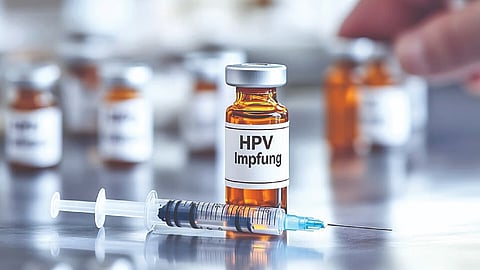
The Centre’s announcement regarding its nationwide Human Papillomavirus (HPV) vaccination programme is indeed a defining moment, given the circumstances and challenges associated with it. The data relating to cervical cancer in India is alarming, as it has a correlation with HPV. It is the second most common cancer prevalent among women. New cases are being diagnosed, and the high-risk type of virus is the cause of thousands of deaths every year.
In fact, India ranks fourth in cervical cancer-related morbidity in the world. The government, as it should, has been treading cautiously, and it is evident in the efforts put in to prepare the ground and implement it in a phased manner. States such as Delhi, Punjab and Sikkim had in the past launched localised HPV vaccination programmes. Tamil Nadu, however, was one of the first states to launch a state-wide free HPV vaccination programme for about 3.68 lakh 14-year-old girls and began with four carefully handpicked districts which had a relatively higher incidence rate.
Besides allocating Rs 36 crore, it had constituted a state advisory committee to oversee the roll-out. Following a recommendation of the National Technical Advisory Group on Immunisation in India (NTAGI), Tamil Nadu has been proactive in the implementation for both school-going and non-school-going girls in the age group 9-14 years. It would be conducted in campaign or mission mode and in a phased manner as a part of the Universal Immunisation Programme (UIP).
Unlike the UIP, which has wider acceptance due to sustained information and awareness campaigns conducted during the past few decades, the HPV vaccination would require a special campaign involving teachers, parents and students. India had faced waves of misinformation relating to COVID-19 and earlier with regard to measles, mumps and rubella vaccination. The HPV vaccine, too, had its share of misinformation. Despite studies having clearly shown that the vaccine has 99% efficacy, unscientific and baseless claims to the contrary are being circulated in messaging and social media platforms, particularly WhatsApp.
Another myth that makes parents wary is misinformation relating to vaccines triggering and promoting sexual promiscuity among adolescents. In recent years, some persons linked to the right-wing ecosystem have been casting aspersions on vaccines in general and wrongly linking them to autism. This is similar to what has been happening in the US.
This needs to be countered effectively, and the government should rein in such persons. Thanks to sustained awareness campaigns by the government and civil society organisations, there is a high level of trust in vaccines among people. Much of the credit should deservedly go to the frontline healthcare workforce, especially the ASHA and Auxiliary Nurse and Midwifery or ANM workers. Recognising the need for awareness and behaviour change communication, the Centre had in the past urged states to initiate such campaigns.
Also, last year, the Centre got the stakeholders to review an indigenously developed HPV test kit for screening cervical cancer. Such developments will give impetus to the ongoing screening programme, which began a decade ago. To ensure the success of vaccination and screening programmes, the Centre should focus on states that do not yet have a robust and responsive healthcare and school education systems and an overall high Human Development Index scores.
