
- Chennai
- Tamil Nadu
- India
- World
- EntertainmentEntertainment
- Business
- Sports
- Lifestyle
- Technology
- Videos
- Explainers
- Editor's Picks
When Kripa Vaidyanathan’s 27-year-old niece died in an Alaska car crash in 2024, her family in Chennai felt shell-shocked. They questioned why this tragedy would befall them when they had such “immense faith in God.”
Vaidyanathan, a yoga instructor, managed to secure an audience for her grieving sister with a high-profile guru, hoping for solace.
“Instead, he told her it was the result of karma and urged her to use the tragedy to connect with her inner nature,” Vaidyanathan recalled. “I understand the concept of karma, but saying that to a mother freshly grieving her child was cruel and unhelpful.”
That’s when they turned to artificial intelligence chatbots.
“Seeking answers became much easier because ChatGPT does not judge,” Vaidyanathan said. “We eventually found a compassionate guru, but his time is limited. AI is accessible 24/7.”
These chatbots run on large language models trained on massive datasets, including sacred texts like the Bhagavad Gita. They allow users to explore existential questions and personal problems without the cost or hassle of booking time with in-demand spiritual leaders.
This shift has prompted several well-known figures to embrace the medium.
Jaggi Vasudev, popular as Sadhguru, launched the Miracle of the Mind app featuring an interactive AI trained on his teachings. Similarly, California-based self-help author Deepak Chopra introduced “Digital Deepak”, an AI platform drawing from decades of his talks and books.
Vikas Sahu, founder of GitaGPT — a platform he calls an “AI spiritual companion” — says he wouldn’t deter anyone from finding a human guru. But he says his free chatbot puts the Bhagavad Gita’s wisdom at the fingertips.
“Many people simply have no one to turn to in moments of distress,” Sahu said, adding that he considers the responses reliable because they draw directly from sacred scriptures.
Sahu said he trusts GitaGPT because it’s based on the word of God. “How could Krishna steer anyone wrong?” he asks.
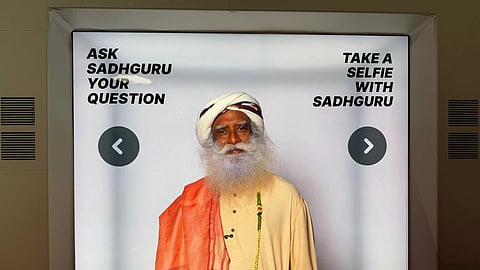
During a March festival, he created a Sadhguru hologram that took selfies with people. “You basically have Sadhguru’s hologram taking out his phone, turning around and taking a picture of you from his phone inside the display,” Nussbaum explained.
Meanwhile, tech developers are exploring immersive ways to bridge the gap. Shivaram K R, CEO of Hue Learn, leads Innerverse 360, a non-profit initiative merging AI with spirituality. The platform features an interactive portal where real monks host live sessions alongside an “Ask AI” feature.
Shivaram doesn’t believe AI will replace gurus.
Organisations like the Los Angeles-based Self-Realization Fellowship, founded in 1920 by Paramahansa Yogananda, view AI as a natural progression for spreading teachings, much like books were in earlier eras.
Brother Govindananda, a monk with the order, said his organisation sees AI simply as the next step to helping people access the late guru’s teachings through an online teaching portal — just as books did for previous generations.
“We are humans and souls,” he said. “Technology cannot replace that.”
