
- Chennai
- Tamil Nadu
- India
- World
- EntertainmentEntertainment
- Business
- Sports
- Lifestyle
- Technology
- Videos
- Explainers
- Editor's Picks
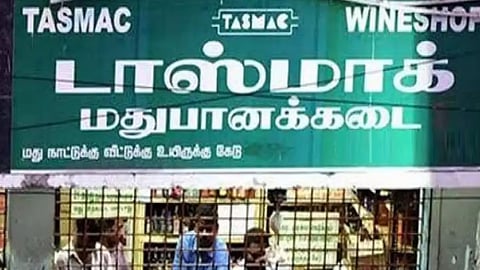
Chief Minister C Joseph Vijay’s decision to shut Tasmac shops near schools, temples, and transport hubs marks the strongest anti-liquor intervention in decades. The symbolism is clear: public spaces should not normalise addiction. The shutdown of 717 Tasmac liquor outlets located within 500 metres of schools, colleges, temples, and principal bus terminals led to the closure of almost 15% of retail liquor in the State. Indeed, a politically symbolic, socially desirable and fiscally significant step.
It is the most aggressive anti-liquor measure since governments had tried to phase out closures. The importance does not lie solely in the number of businesses closed but in their geographical locations. Of those 717 outlets, 276 were located in closer proximity to places of worship, 186 were near schools, and 255 were around transport hubs. The closures redraw the moral contours of public space, signalling that addiction must not be normalised as part of quotidian civic life.
Tamil Nadu’s political economy has lain in a paradox for decades. The State constructed one of India’s biggest welfare architectures, from noon meals to public health and women’s education, while simultaneously relying heavily on liquor revenue. Tasmac became a fiscal tool underpinning welfare. In 2024–25, Tamil Nadu’s income was recorded in the range of Rs 48,344 crore through liquor excise duty and VAT levy receipts. If 15% of the outlets are shut for good, the loss could range from Rs 6,500 crore to Rs 7,200 crore annually. With Tamil Nadu’s projected 2025–26 GSDP of Rs 35.67 lakh crore, this covers 0.2% of GSDP. Though it would seem manageable on paper, politically and administratively, the challenge is vast.
Tamil Nadu’s welfare-heavy model has historically depended on robust proprietary revenue generation. Unlike the northern states that rely heavily on central transfers, Tamil Nadu finances large-scale social spending by internally generated resources. An excise tax on liquor attracted high interest because it had high elasticity with low collection costs. But the social costs have been enormous. Public health research repeatedly relates access to alcohol resources to domestic violence, indebtedness, absenteeism in the workplace and education. Women-organised protests have repeatedly brought to light how state reliance upon liquor has disproportionately affected poor homes. Vijay’s motion, then, is a bid to move the social justice line beyond transfers of welfare, to make clear that public spaces should not be complicit in addiction.
History — however — provides some warning. The prohibition experience of Bihar exposes how poorly regulated bans drive illicit markets. Tamil Nadu had also seen tragic hooch incidents during periods of restriction. The real test, however, is not in closure alone but in regulatory transition. On a fiscal level, what opportunities exist if Tamil Nadu weaves its way back to less reliance on liquor revenue? The State is better situated than most to cope with the shock. Tamil Nadu is India’s second-largest State economy and among one of its most industrialised states. In fact, its economy registered a 10.83% growth in 2025–26 compared to the national average. Automobiles, electronics, renewable energy, and semiconductor manufacturing have been fast-tracked.
The first is tax base deepening, not tax rate escalation. Lack of harmonisation in GST compliance of SMEs is one issue. Adoption of digital-based invoice integration, AI-guided analytics of transactions and municipal property tax reforms can help with buoyancy without distortion.
Second, Tamil Nadu needs to shift from consumption-based taxation towards innovation-driven revenue ecosystems. In 2024–25, the State represented almost 23% of all patent applications made in India, with 15,440 patents filed. This ability for innovation is underutilised. Technology parks, research-linked industrial corridors, and knowledge-sector investments can produce longer-term tax buoyancy to a greater extent than liquor sales.
Third, inefficiencies within Tasmac itself must be addressed. The Comptroller and Auditor General flagged the unpaid excise duty of Rs 30.5 crore, outdated procurement policies, and cartelised tendering. Allegations of “Rs 10 over MRP” collections suggest systemic leakage worth thousands of crores annually. Without reform, closures risk shifting revenue from formal channels to informal corruption. End-to-end computerisation, real-time billing, and independent oversight are essential to restore credibility. Closures without change could transform revenue outflows into corruption on the street. Credibility can only be regained with full-cycle computerisation of the entire system, billing in real-time, and independent scrutiny.
The broader political relevance of Vijay’s move is democratic aspiration. Tamil Nadu is perhaps in the post-op phase of a post-populist India, where voters are seeking more than just welfare delivery, but quality of life governance in this way. Cleaner streets and fewer drugs, women’s safety and healthier communities are becoming central political issues. The debate is no longer whether the State should make money, but what kind of social contract money should maintain. In that respect, the closure of 717 Tasmac outlets is more than an excise policy.
It is the tip of a big debate over the future trajectory of Tamil Nadu’s developmental model. Whether that argument works will depend on the need for a striking balance: can the State decrease social dependence on alcohol without undermining fiscal sustainability? It is the actual policy test that lies ahead.
Thakur is Professor and Dean, Vinayaka Mission’s School of Economics and Public Policy, Chennai
