
- Chennai
- Tamil Nadu
- India
- World
- EntertainmentEntertainment
- Business
- Sports
- Lifestyle
- Technology
- Videos
- Explainers
- Editor's Picks
Carlo Harvey
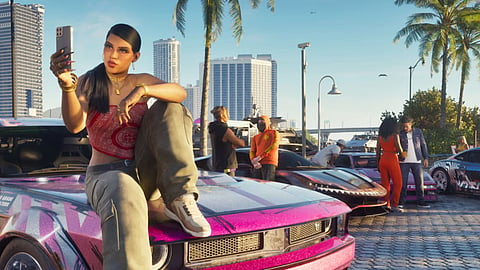
In Grand Theft Auto 6 (GTA 6), released last week, players can explore Vice City and fictional Leonida. Its detailed environments reflect years of work to make digital experiences feel close to real life. But the technology behind such realism has applications far beyond gaming, helping researchers, engineers and filmmakers simulate and interact with the world.
A US-German research team used images from GTA 5 to help artificial intelligence (AI) systems recognise roads, cars and buildings for applications such as self-driving vehicles. Because the game already contained information about objects in each scene, the researchers could label 25,000 images for AI training in just 49 hours. Manually labelling the same number of real photographs would have taken several years.
Much of this potential lies in game engines: software platforms used to build and run games. Engines such as Unity and Unreal Engine help designers, researchers and engineers create realistic virtual environments.
Using Unity, researchers reconstructed the site of Mostar’s famous old bridge in Bosnia and Herzegovina. The virtual reality experience allowed users to explore the site, hear from a local diver and experience a simulated jump, helping them understand the cultural significance of the diving tradition.
A convincing simulation, however, is only part of the task. Researchers must also establish how people use it. User testing during the Mostar project showed participants did not navigate the virtual setting as expected, prompting interface changes. Such adjustments can make digital experiences more intuitive.
Game engines are also helping train robots. Researchers trained an AI system to operate a virtual robot arm in Unity and move objects, then linked its movements to a physical, 3D-printed arm. The aim was to test whether skills acquired in a digital environment could transfer to a real machine.
Known as “sim-to-real” transfer, the approach allows researchers to repeat tasks and test different methods in simulation before using physical equipment. It has also been used to train drones to navigate unfamiliar settings, including forests and damaged buildings.
But the physical world rarely behaves exactly like a simulation. Sensors can make errors, movements may be delayed, and conditions can change. This “reality gap” means systems must be tested in real-world conditions and simulations adjusted when they fall short.
The creative industries are benefiting too. Disney’s The Mandalorian used Unreal Engine to generate digital environments displayed on large LED screens around actors and physical sets. Filmmakers could work with these settings during production, reducing the need for elaborate sets or travel and bringing technical and creative teams together earlier.
Across cultural heritage, robotics and filmmaking, the common thread is interactive simulation: virtual environments in which ideas can be explored, tested and refined before being applied in the real world. As GTA 6 showcases the possibilities of digital entertainment, gaming technology’s wider applications demonstrate its value beyond the screen.
Carlo Harvey is Professor of Digital Arts at Manchester Metropolitan University’s School of Digital Arts
