
- Chennai
- Tamil Nadu
- India
- World
- EntertainmentEntertainment
- Business
- Sports
- Lifestyle
- Technology
- Videos
- Explainers
- Editor's Picks
In the latest remarks demonstrating his arm-twisting leverage over the Indian Prime Minister, US President Donald Trump has said this week that he expects New Delhi to cut back further on its oil purchases from Russia, failing which he would exercise his option to raise tariffs further on imports from India.
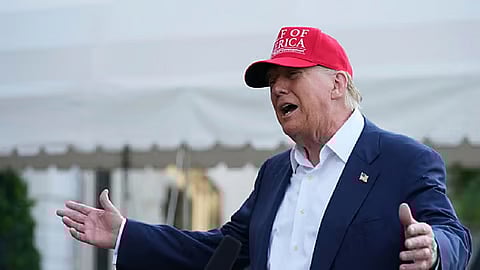
Speaking like a classroom bully, Trump said Modi has already scaled back oil imports from Russia to “make me happy” but expected him to do more. Or else, he could “raise tariffs very quickly”. He qualified this bit of thuggery with the usual sweetener that “Modi is a very good man”.
That sort of passive aggressive language leaves little to doubt that Modi is locked in a relationship with Trump, which is akin to that between a bully and his quarry. It is unfortunate that this asymmetry has come to characterise bilateral ties between India and the US as well. American Senator Lindsay Graham, who was present when Trump made those remarks, insinuated as much when he said New Delhi’s Ambassador to the US, Vinay Kwatra, has been importuning him to inform Trump that India has indeed reduced oil imports from Russia, as instructed by Washington. “This stuff (tariffs) works,” Graham told the President.
Recent data suggests that it does. Oil purchases from Russia fell 38% in October 2025, and Reliance Industries said on Tuesday, January 6, that it has not received any shipments of Russian oil in the past three weeks and is not expecting any this month.
While India is offering cutbacks as an appeasement to Trump, Washington will evidently not be satisfied with anything short of zero. In fact, as Senator Graham said, the US Congress is readying a Bill that makes room for an astonishing 500% tariff on countries that buy any oil from Russia.
Despite the so-called chemistry between Trump and Modi, the BJP-led Union government’s foreign policy has been reduced to abject status. India’s exporters are already groaning under Trump’s 50% tariffs and the US President’s flip remarks this week make it clear that appeasement only whets his appetite. It is therefore fair to ask what has been achieved by New Delhi’s supine-ness so far.
In fact, not being stern has come to mark India’s foreign policy at large. Belying its claim to speak for the Global South, New Delhi has adopted a fence-sitting posture on America’s aggression against Venezuela. Its first response to news of the US’s invasion of a sovereign country and abduction of its president was to issue a travel advisory and then to claim that it would ‘study’ the situation before offering comment.
Even US allies in Europe were not as weak as that. Behind the pretext of “strategic ambiguity”, fence-sitting has become the sum and substance of India’s foreign policy.
To all those who say there is a grand Chanakya design behind all this, the question must be asked what interests of India have been served so far by capitulating to Trump on trade with Russia, by looking the other way on Israel’s genocide in Gaza, by preaching morality to the warring parties in the Russia-Ukraine conflict. Indeed, what purpose has been served by niggling Bangladesh ahead of an important election by disallowing one of its cricketers to play in the IPL? These are signs of a foreign policy in disarray.
