
- Chennai
- Tamil Nadu
- India
- World
- EntertainmentEntertainment
- Business
- Sports
- Lifestyle
- Technology
- Videos
- Explainers
- Editor's Picks
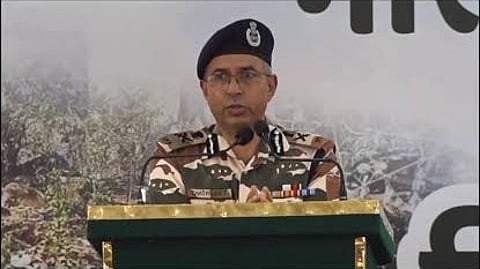
The director-general of the Indo-Tibetan Border Police (ITBP), Shatrujeet Kapur, said last week that face-offs between Indian and Chinese troops are continuing to occur at multiple points along the Line of Actual Control (LAC) in Arunachal Pradesh. In fact, “a situation” arose in “the past few days” and “it still continues." This sotto voce revelation is typical of how India’s military and border commanders let the public know about LAC engagements with China, in contrast with their far more forthcoming communiques regarding other frontiers.
Kapur’s disclosure gives credence to local media reports about increasing People’s Liberation Army (PLA) activity along the LAC in the eastern state since 2020. Back in June, a civil society group submitted a memorandum to the local administration reporting that the PLA has been building roads and bridges and setting up camps in traditional grazing areas where both countries have overlapping claims. A fact-finding team reported that Indian troop patrols no longer had access to several key points in the strategic Taksing area of Upper Subansiri.
The current standoff is in the Asaphila Sector of the LAC where PLA troops have reportedly advanced 6-7 km into India’s territory and pitched temporary tents on elevated terrain. In response, India has had to reinforce its troop presence on adjacent ridges to contain further Chinese movement. Longju, in the same area, is another point where patrolling paths overlap. When operational friction spiked in the Taksing and Anjaw Sectors a month ago, emergency corps commander-level talks were held at the Wacha-Damai border point to cool things down.
While not making light of the matter, the Ministry of External Affairs has stated that such border friction does periodically occur when Chinese forces deviate from established patrolling patterns and that both sides keep communication channels open and hold local flag meetings to manage stand-offs. That may be the case, but the Modi government’s reluctance to acknowledge the reality does give scope for alarmist perceptions. For instance, it has been reticent on reports that India has lost access to several patrolling points in the Taksing sector after the Chinese established a position there.
Reticence as policy, as opposed to confident articulation of India’s case, risks feeding a perception that New Delhi is dealing from a position of weakness in talks with Beijing. The ITBP chief’s disclosure came just weeks after PM Modi met Chinese President Xi Jinping on the sidelines of the BRICS Summit in New Delhi, and shortly after National Security Adviser Ajit Doval went to Beijing for boundary talks. His low-intensity leak gives play to criticism that the BJP-led Union Government is treating this crucial issue as a case of perception management rather than bold articulation of policy.
One recalls the PM’s statement to an all-party meeting in June 2020, in the face of the Galwan standoff, that “no one has entered Indian territory nor captured any Indian posts”. Instead of reassuring the public, it sounded like a timorous avoidance of reality. Reticence, all too often, is this regime’s default tendency in the face of a political challenge, be it the agitation against voter list revision or the coercive approach of the US administration in the current trade talks. Such a tendency does nothing for the public’s confidence in the regime and strikes a hard contrast with its boldness when destroying weak opponents.
