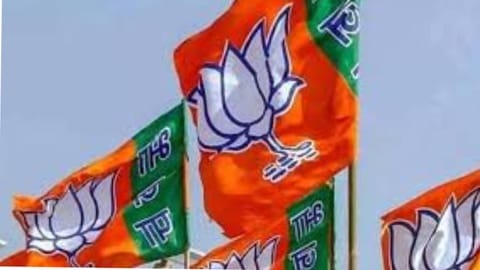

The BJP’s unprecedented victory in West Bengal assembly elections and successful retention of power in Assam will certainly cheer the party acolytes and others enamoured by the idea of one-party rule, who naively believe that it would usher in swift development. There are others who think that one dominant party would spell doom for India’s evolving democracy.
The BJP’s election juggernaut continues to roll, crushing political rivals under its well-oiled wheels and with unfair push it receives from the Election Commission, the investigative agencies and the central forces it commands. The party’s electoral victory is marred by acts of commission and omission, of abnegation of duties and responsibilities by constitutional bodies. The party may claim otherwise and challenge its critics to prove it in courts, but any discerning observer can see the coincidences, the predictable patterns and the glorification of its tactics by the party’s rank and file. There is indeed some merit in the opposition's claim that it is becoming more difficult to defeat the party when the dice are loaded against them even before the game begins.
The ruling party has to be given the credit for metamorphosing into an efficient and ruthless election campaign machine that keeps plodding relentlessly for years together, and the party and Prime Minister Narendra Modi are forever in election mode. So much so, the single-minded focus is more on winning elections than on governance after coming to power.
It is intriguing and inexplicable as to the contrast between the BJP and the opposition with regard to anti-incumbency. Even seasoned political pundits fail to provide a convincing explanation as to how TMC in Bengal faces anti-incumbency but not BJP in Assam, or, for that matter, any other state. The vice-like control of narrative and headline management is aided by sections of pro-BJP media in cahoots with the party’s IT cell, which orchestrates the incessant propaganda.
The allegations of voter list manipulation by the BJP and of large-scale selective and targeted disenfranchisement through SIR by the Election Commission are said to have played a decisive role in the string of victories enjoyed by the party in Assembly elections since 2024, after a not-so-impressive performance in the general elections. In Assam, the ruse of citizenship is used not only to weed out minorities from voter lists but also to trigger anxieties among the majority community.
As an avowed Hindutva party, the BJP is unabashed about using religious issues to consolidate its Hindu voter base. More problematic than harping on Hindu unity and pride is the demonising of minorities. The mid-rung leaders launch direct attacks using inflammatory, confrontational language, while the top leadership resorts to dog-whistling. It uses this playbook more aggressively when it needs to break into states like West Bengal that are considered opposition strongholds. The fear that the party would be more emboldened to try this playbook in the southern states is too real to be ignored.
Efforts to weaken and defang the Opposition, by hook or crook, do not augur well for democracy. The same party in power at the centre and in most of the states would undermine federalism, and with delimitation, it would literally shut the corridors of power for the opposition. As it happened in Assam and Manipur, in West Bengal too, after elections, it would be nearly impossible to put the genie of divisive ideology and concomitant violence back in the bottle.