
- Chennai
- Tamil Nadu
- India
- World
- EntertainmentEntertainment
- Business
- Sports
- Lifestyle
- Technology
- Videos
- Explainers
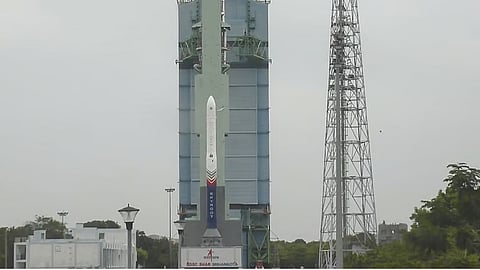
For the first time, an Indian private sector space company has been successful in launching a rocket into Low-Earth Orbit. The Hyderabad-based Skyroot Aerospace’s debut mission has been nothing short of impressive. It can be considered a successful proof of concept, demonstrating the scalable potential and viability of space sector entrepreneurship. Until now, space missions have been the exclusive of the public sector Indian Space Research Organisation or ISRO. Now the trailblazing start-up has made a beginning in paving the way for other aspirants.
Skyroot is winning accolades for its rapid development of launch vehicles by leveraging entrepreneurial drive and homebred engineering talent. The company said that the success of Mission Aagaman validates its technical prowess in rocket propulsion, avionics, and other related areas. This test flight will be followed by a few other similar missions before the company breaks into the orbit of regular commercial flights and business operations.
The young company, founded in 2018, is wellplaced to sustain and grow in the years to come. With a billion-dollar valuation, it has the financial muscle to dream of bigger projects. It can tap into the cheaper engineering talent and the efficient management team has proven business acumen. It also has government backing and benefited from the autonomous single-window nodal agency Indian National Space Promotion and Authorisation Centre (IN-SPACe), and other initiatives. On its part, ISRO provided the necessary hand-holding and support in terms of providing access to facilities and infrastructure at Sriharikota, the space port from where the four-stage Vikram-1 rocket was launched. The public sector space giant’s active involvement in technical consultancy, testing, safety, and other pre-launch operations was critical for the mission’s success.
The agile company will have to survive and flourish in a highly competitive global market in which US and European companies are vying with each other for a larger share in the pie. It has to compete with established players like Elon Musk’s SpaceX and a bunch of European companies. According to experts, Chinese private sector companies could have posed a formidable challenge but potential customers would be wary of the lack of autonomy and their links to Chinese political and military establishment. The concerns range from data security to legal restrictions, besides fears relating to intellectual property and espionage. But the market is said to be large enough to accommodate several players but breaking into the top league will prove to be far more difficult.
While ISRO continues to play an enabling role for Indian space start-ups, ironically it has been facing a problem from its protégés, as reports are coming in about engineering and scientific talent leaving it in droves. The flight of talent has happened in other sectors like telecom, oil and gas, aviation, banking and financial services, and healthcare when they were opened up for the private sector. The public sector always lost its cream of talent to poaching by the private sector.
The mass attrition is mainly due to the lure of fat paychecks, besides lucrative stock options or ESOPs and quicker career growth. But the private sector is also perceived to be less bureaucratic and therefore offers more freedom and flexibility in operations. The government should have foreseen this and taken preventive steps. It could do better than introducing stringent exit rules, which is a knee-jerk bureaucratic remedy, for a problem that requires a business management strategy and corporate governance solution.
