
- Chennai
- Tamil Nadu
- India
- World
- EntertainmentEntertainment
- Business
- Sports
- Lifestyle
- Technology
- Videos
- Explainers
- Editor's Picks

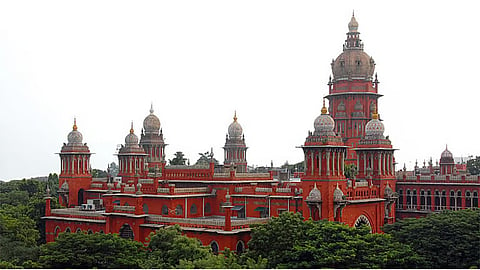
CHENNAI: The Madras High Court made it clear this week (July 8) that private schools must comply with an order issued by the Tamil Nadu Directorate of Private Schools to display their fee structure on their notice boards and websites. Even though these schools receive no aid from the state government and claim they are not required to submit to state oversight, they must furnish full fee disclosure as dictated by the Tamil Nadu Private Schools (Regulation) Rules.
Given that private schools are affiliated with different boards, fee disclosure is one of the issues that fall in a jurisdictional grey area. Multiple entities claim to have a say in the matter. While autonomy is welcome, the state does have a responsibility to protect the interests of the parents of schoolchildren. Every school operates within a community and therefore owes it to the community to disclose all the charges it levies on its pupils. Justice M Dhandapani’s judgement will be welcomed by parents because it enables them to keep a check on usurious practices by schools.
This is not the first time that a court has stepped in to make private schools fall in line. Litigation on school fees has a history of more than two decades. Courts have consistently intervened to rein in schools’ tendency to exercise their pricing power. The Supreme Court and some High Courts have ruled against profiteering by schools and directed states to set up fee regulatory structures and involve parents in administering charges. The rule of disclosing public fee particulars in their entirety to the public is one of the outcomes of a long journey toward transparency.
Unfortunately, private schools have dragged their feet all along, and today stand as experts in extraction, second only to hospitals. While moderating their tuition fees to appear reasonable, they add on an array of other costs: development fees, building fund, special activities charge, laboratory fees, and so on. Some costs are labelled as optional, but payment is extracted under duress. Some charges are not disclosed at all. Some schools set up adjacent ‘charitable’ trusts to receive off-the-books payments.
Such extractive practices make children’s education one of the largest annual expenses for an average household in India. Education inflation is reported to run above 8-10%, far above consumer price inflation, and never comes down. Because of undisclosed charges by schools, there is a huge gap between what parents experience — fee hikes of up to 20% in some cases — and what official policies account for. This structural skew transforms education into a burgeoning black market comparable to real estate and films.
While the Madras High Court order has clarified the legal position, it is the responsibility of regulators to enforce the fee disclosure norms with energy and rigour. Unfortunately, past orders have often been trifled with, leaving errant schools with little more than a slap on the wrist. The Central Board of Secondary Education, for instance, requires every school to give an exact and exhaustive disclosure of all details — fees of all kinds, teacher-pupil ratio, facilities available, official certification, etc. — on its website with a Mandatory Public Disclosure link on the home page. But often those links are broken links or yield outdated information. It’s the regulators’ duty to round up the errant cases and make the disclosure rule work.