
- Chennai
- Tamil Nadu
- India
- World
- EntertainmentEntertainment
- Business
- Sports
- Lifestyle
- Technology
- Videos
- Explainers
- Editor's Picks
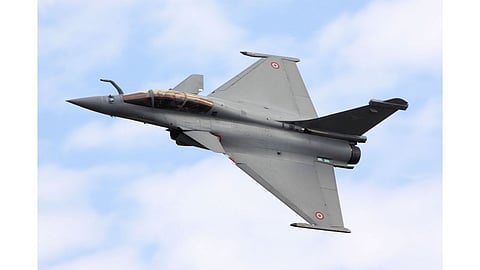
The Centre’s proposal to acquire 114 Rafale fighter jets from France comes at a time when India needs to consolidate and strengthen its air dominance in the region, in the backdrop of fast-changing geopolitical dynamics.
The mammoth Rs 3.25 lakh crore deal, which is nearly half of the country’s annual defence budget, is expected to provide sufficient power and capability to counter the upgraded US-built F-16 jets of Pakistan or the fifth-generation indigenously built fighter jets of China.
Whether or not there is any grain of truth in Pakistan’s claims that at least three Rafale jets were downed during Operation Sindoor or in China’s campaign to cast aspersions on Rafale’s performance, in India, there was bipartisan consensus regarding Rafale’s suitability.
Way back in 2007, the then UPA government had declared Dassault Aviation as the lowest bidder whose combat aircraft met Indian requirements. The subsequent controversy, however, was over the pricing and structuring of the deal, which the Congress party argued was disadvantageous to India. In fact, one of the major criticisms was the reduction in the number of jets from 126 to 36. With this deal, India can boast a fleet of nearly 150 jets in a few years.
India’s decision to stick to the French supplier is to be seen in the context of the US and Russia offering their wares to India. At the outset, purely on performance, Rafale is said to have an edge over its rivals as far as India’s ongoing Multi-Role Fighter Aircraft (MRFA) programme is concerned. But trade and geopolitical dimensions are also factors considered in defence acquisition.
Ever since Trump and his administration unleashed a tariff war, the chances of India indulging the US with a mammoth deal have become dim. But India did try to leverage its defence cooperation with the US to appease Trump. Last year, India’s defence minister and his US counterpart signed a 10-year framework for a US–India major defence partnership to “usher in a new era in an already strong defence partnership”.
In the case of Russia, according to defence experts, India already has a Russian-supplied fighter jet fleet. It chose France as it wanted a diversified fleet and to include an “omnirole” jet that can multitask simultaneously during a single sortie, which has an edge over other jets. However, Russia continues to be a reliable and trusted friend, and India need not worry much on that count.
The Rafale deal is to be seen in the context of rising geopolitical risks, especially those involving Pakistan and China. New challenges are coming to the fore in the turbulent neighbourhood and the changing situation in, and relationships with, neighbours on whom China is trying to expand its influence. Developments in the Middle East and Western efforts to fish in the troubled waters of Iran spell danger for Indian strategic interests. While the Indian right wing might be foolishly rejoicing by viewing the Iranian crisis through a religious lens, the Indian government is acutely aware of the possible consequences for its energy security and wider economic interests, including investments in Chabahar Port and the broader International North-South Transport Corridor.
India is far from becoming Atmanirbhar (self-reliant) in developing a truly indigenous, sovereign fighter jet ecosystem to reduce dependence on foreign suppliers, and the government needs to think long- term and act posthaste.
