
- Chennai
- Tamil Nadu
- India
- World
- EntertainmentEntertainment
- Business
- Sports
- Lifestyle
- Technology
- Videos
- Explainers
- Editor's Picks
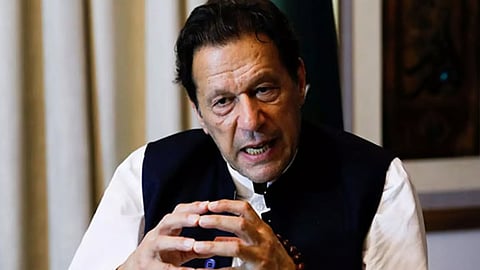
The Pakistan Supreme Court’s intervention in favour of jailed former prime minister Imran Khan added a new dimension to the ongoing tussle and political stand-off between the government and the leader of Pakistan Tehreek-e-Insaf (PTI). The court directed the immediate medical transfer of Khan to a reputed private hospital and be given treatment under the watch of an independent medical board, which should also include his personal physician. The government challenged the Supreme Court order and sent Khan to the government-run Pakistan Institute of Medical Sciences hospital for a check-up. He was later returned to the prison as PIMS doctors reportedly declared the 73-year-old cricketer-turned-politician fit. The legal and political bickering between the government and PTI continues with each accusing the other of contempt of court.
The intense rivalry between Pakistan’s major political parties often degenerates into brazen vindictive politics. Political discourse is polarised and lost in the cacophony of mutual accusations of corruption. Consequently, whoever is in power would give democratic norms a go by and the ruling party resorts to high-handed actions and crackdowns against its rivals. In many south Asian countries - and more recently even in strongmen-ruled Western countries like the US - ruling parties abuse State apparatus and weaponise investigating agencies in a bid to either silence dissent or to neutralise opponents by threats of imprisonment and more. Pakistan is no exception to this eerily familiar playbook and the recurring phenomenon of political witch-hunt.
One of the reasons for the Pakistan government’s stubbornness is Khan’s enduring popularity and his considerable street power to mount an effective challenge to the military backed political establishment. However, his imprisonment has been counterproductive, as it turned him into a martyr of sorts, a political symbol of heroic defiance. It is clear that the State failed to weaken his party through repressive action or dismantle his political clout.
On the other hand, Imran Khan is also not without his political deficiencies and failings. His governance track record has not been impressive and the corruption and mismanagement under his watch is believed to have contributed to the present crippling economic crisis. He over-promised but under-delivered and tried to wriggle out by blaming “external factors”. His tenure was marked by the utter disregard for parliamentary processes or dialogue, the labelling of rivals as traitors, and, of course, mixing populism with regressive religious fundamentalism. The miscalculation of the military’s overarching power was the proverbial last straw.
A group of 21 international cricketers, including Indian veterans Sunil Gavaskar, Dilip Vengsarkar, and Kapil Dev, have appealed to Prime Minister Shehbaz Sharif for the second time that Khan, arguably one of the world’s cricketing greats, should be given “humane treatment and proper medical care”. What the cricket legends are asking of the government is that the incarcerated leader should be given a comprehensive health evaluation by the Supreme Court-directed independent medical board, be provided necessary treatment, and visitation rights to family members be restored. The international solidarity of cricketers, who were once his fierce rivals on the cricket field, should be given due importance as it is clearly an apolitical move arising out of universal sporting values and the spirit of sportsmanship. The Shehbaz Sharif government should heed to their plea and use the opportunity to demonstrate his government’s commitment to fair play and a humanitarian approach.
