
- Chennai
- Tamil Nadu
- India
- World
- EntertainmentEntertainment
- Business
- Sports
- Lifestyle
- Technology
- Videos
- Explainers
- Editor's Picks
Prime Minister Narendra Modi utilised the G7 outreach session to make a fervent appeal to the global community to ensure that maritime routes are secured so that seafarers can work without fear. The statement made news in India and is being interpreted as an assertive nation making a strong point, reflecting its underlying displeasure at the loss of Indian lives due to conflict — notably the three Indian crew members killed in a US military attack on a merchant ship near Oman last week. It was in line with New Delhi issuing a strong diplomatic protest, with External Affairs Minister S Jaishankar telling US Secretary of State Marco Rubio that the attack was “unjustified”. While foreign policy experts may not be surprised by India’s “restraint” towards the US, Opposition parties were critical of the weak and ineffective response. There is considerable scepticism over the government’s claim regarding “strategic autonomy” in foreign policy and whether the US can dictate to a sovereign country like India, even as Trump and his administration have been repeatedly seen exerting pressure on a wide range of issues, especially tariffs and the import of Russian crude oil.
Modi seized the initiative to moot the idea of setting up connectivity projects with countries in Africa, Latin America and the Pacific Islands. Given his penchant for acronyms, he coined a new one for the proposed project: IMPACT, or International Mobilisation Partnership for Accelerating Connectivity and Trade. Presenting India as a major emerging global power and Modi as an international statesman who can proffer silver bullets to complex global challenges to domestic voters is one thing; making it work in the competitive and contested international arena will be an altogether different challenge.
This idea is along the lines of IMEC, or India-Middle East-Europe Economic Corridor, which was launched with much fanfare at the G20 summit in New Delhi but is yet to take off in a significant way. These multinational, gargantuan projects are expected to counter China’s Belt and Road Initiative, which itself has metamorphosed from a physical connectivity infrastructure project to a strategic resource and energy development project. Beijing has been aggressively pumping in billions of dollars, and 2025 saw its highest engagement ever since its inception. Meanwhile, IMEC has almost stalled due to regional conflicts, multi-billion-dollar finance mobilisation challenges and regulatory hurdles. While there has been some progress in digitised trade corridors, the crucial high-capacity rail connectivity from West Asia to the Adani-owned Israeli port of Haifa remains in limbo. IMEC, too, might pivot realistically towards digital modes and energy-focused projects.
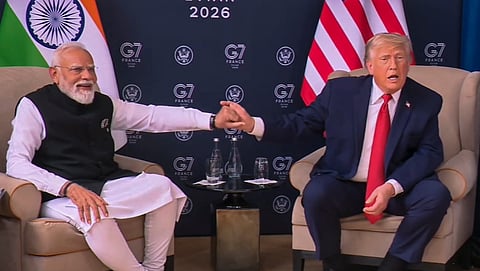
Of greater interest to India would be the bilateral meeting between Modi and Trump on the sidelines of the summit. Incidentally, this will be the first face-to-face meeting between the two leaders since 2025, amidst speculation about Modi avoiding the increasingly intractable US President. Given that the interim bilateral trade agreement is in its final stage of negotiations and a senior US trade official is scheduled to visit New Delhi to give it finishing touches, the meeting could be productive. But, like other nations, India too should brace itself to deal with an unpredictable US president and his potentially destabilising America First agenda.
