
- Chennai
- Tamil Nadu
- India
- World
- EntertainmentEntertainment
- Business
- Sports
- Lifestyle
- Technology
- Videos
- Explainers
- Editor's Picks
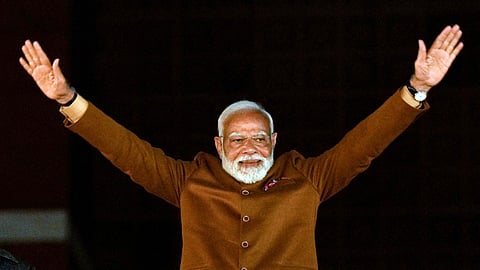
The participation of the Prime Minister, or other prominent political leaders and elected representatives, in religious celebrations and issuing of statements to convey greetings and wishes are usually a routine affair often done as a norm as per protocol. But when it comes to Prime Minister Narendra Modi participating in such celebrations, they tend to acquire a special political significance. More so, if it relates to religious minorities. This year too, his participation in Christmas celebrations in a church in the national capital is making headlines, and political parties and commentators are trying to decode its subtext.
Every year, Hindutva organisations, especially in states ruled by the BJP or where it has immediate electoral interests, indulge in incidents of violence, intimidation, and vandalism against the Christian community during Christmas. As pointed out by Congress leader and former Rajasthan chief minister Ashok Gehlot, the prime minister restricts himself to sharing messages of peace and harmony instead of coming out strongly against violence and ordering stringent action against hate crimes. Even Congress leader Shashi Tharoor, who has been viewed lately as an apologist of BJP politics, expressed concern over the attacks and the rising fear and anxiety among Christians during their festivals.
The politics behind the above events are invariably discussed. These high-profile events held under the media glare are often used for political messaging and are widely believed to be calculated to impact elections. There is a certain cynicism regarding the use of religion for electoral gains in states like Kerala, Tamil Nadu, and a few north-eastern states. It is nothing short of a miracle how the party successfully manages to woo Christians in these states, even while its supporters unleash violence and intimidation to sustain religion-based hate politics in other parts of the country.
The BJP uses these symbolic events to counter criticism about the treatment meted out to minorities in the country. Since the BJP came to power, the United States Commission of International Religious Freedom has been consistently highlighting the deterioration of religious freedom, and this year labelled India as a “country of particular concern”. The searing and damning findings highlighted in the report could not be ignored by the government, which officially responds by casting aspersions on the Committee’s integrity and motivations. The boilerplate response would include phrases such as biased and motivated, unwarranted interference in internal affairs, and an attempt to influence elections. The right-wing ecosystem argues that the party’s stance can be seen in the PM’s outreach through meeting bishops and other prominent representatives of the community, and his consistent messaging, and not linking the party to the so-called “localised” and stray incidents to create a skewed anti-BJP narrative. Given its headline and perception management prowess, the party manages to get away with it in domestic politics. Not so in international media and politics.
Besides Modi, hardly any national BJP leader of significance and stature participates even in the “token” outreach. The “double standards” argument also gains credence when the party does not come out with strong condemnations of violence and initiate prompt action, which deters extremist elements in the future. Both the BJP and sections of Christian community leaders should desist from short-term opportunism in favour of true, long-term religious freedom and harmony.
