
- Chennai
- Election-2026Election-2026
- Tamil Nadu
- National
- World
- Cinema
- Business
- Sports
- Lifestyle
- Technology
- Videos
- Explainers
Assam, Kerala and Puducherry voted for their state Assemblies on April 9, and Tamil Nadu (April 23) and West Bengal (April 23 and 29) will do so later this month.
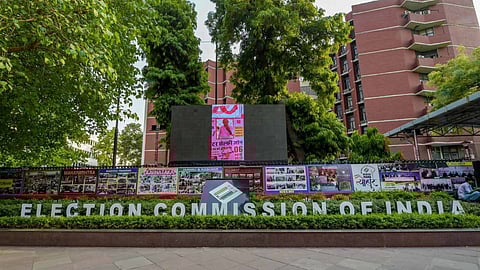
While these elections are a test of the ruling party in each of these states, the glare will also be trained on the conduct of the Election Commission of India (ECI) conduct as well.
Recent rounds of State elections and the last Lok Sabha poll in 2024 witnessed some odd trends and practices that have never been properly explained by the commission. The Bihar election in November 2025 threw up stunning results after a special intensive revision (SIR) had been rushed through by the ECI.
With the voter rolls of Kerala, Tamil Nadu, and West Bengal also similarly scrubbed, and Assam caught up in a demographic churn due to the National Register of Citizenship process, the current elections will therefore be watched for a recurrence of such surprises and questionable conduct by the commission.
One major data point that needs to be monitored is the hour wise voter turnout at the booth level, especially voting after the gates close.
In several recent elections, unusually large numbers (and percentages) of votes were recorded after the official closing time, with an unnaturally high rate of polling.
In an expose on the Andhra Pradesh Assembly election of May 2024, the economist Parakala Prabhakar found that an astoundingly high percentage (4.16%) of the total votes were polled after 11.45 pm on May 13, spilling over to 2 am the next day. Nearly 52 lakh votes were recorded between 8 pm and 2 am.
More than 17 lakh votes were cast after midnight at an astonishing rate of one every 20 seconds.
This phenomenon of midnight democracy of voters apparently turning up in droves after closing time and voting at breakneck speed into the witching hours has been reported in several states in recent years, invariably in constituencies that the BJP ends up winning.
The ECI has been reluctant to part with granular data on this and has never given a plausible explanation for it.
The greater import on these elections will be on account of the SIR, however. The interplay between voter deletions due to SIR and the inexplicable twilight voting pattern seen in the past few elections is hard to predict. The ECI has overseen a summary and rushed revision of the rolls in Kerala, Tamil Nadu, West Bengal, and Puducherry and a special revision in Assam.
Millions of voters’ names have been deleted, ranging from 1% in Assam to 11.5% in Bengal (not final yet) in an operation fraught with poor planning and execution, lack of time, and technological glitches.
The deletions have been disproportionate in Muslim populated districts of Assam and Bengal.
Given such sweeping changes, it would be interesting to correlate constituency-wise deletion data with hour-wise turnout percentages especially after poll closing time.
Either the ECI should release real-time data to watchdog groups or maintain this transparency tool itself.
These are just two new metrics on which the ECI needs to be watched. There are a plethora of others that continue to be relevant.
These include model code enforcement; handling of discrepancies between EVM displays and VVPAT slips; disappearance of CCTV footage; and post-facto revision of data. The only way to smoke out a partisan player is through data.