
- Chennai
- Tamil Nadu
- India
- World
- EntertainmentEntertainment
- Business
- Sports
- Lifestyle
- Technology
- Videos
- Explainers
- Editor's Picks
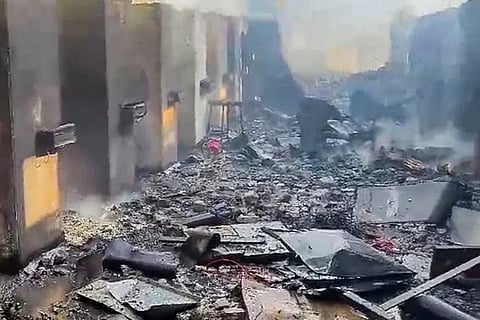
In a short span of time, two factory explosions in Maharashtra and Andhra Pradesh have claimed over 40 lives. Both factories were hazardous by nature. In Nagpur, it was an explosives manufacturing unit, while the one in Kakinada district was a fireworks unit.
Being prone to accidents, these units are supposed to be highly regulated and expected to comply with stringent safety standards. Though only an independent and high-level inquiry can reveal the causes, it can be safely surmised that there have been lapses resulting in loss of lives.
Maharashtra’s Revenue Minister has alleged negligence on the part of the factory authorities, which did not follow safety norms. Besides poor safety standards, the problem becomes more complicated with firecracker units, as they tend to employ cheap, unskilled labour, as is often the case with fireworks factories.
Minor mishaps occur and sometimes may be unavoidable, but disasters, more often than not, could be minimised, if not completely prevented, by enforcing safety standards and factories proactively following them scrupulously. The frequency with which disasters have been happening points to the failure of the system at multiple levels.
How closely and frequently are these units checked for compliance? Besides buildings and structures, safety audits should mainly focus on the storage of hazardous substances and fire-fighting systems. Sourcing and storing hazardous materials beyond permissible limits makes a unit vulnerable to major accidents.
Electricity and power circuits, faulty or in violation of safety protocols, are often the cause of triggering fires and blasts. It is clearly a governance failure that governments have not been able to put in place an effective, uncompromised and incorrupt inspection mechanism, which is critical for preventing disasters.
Moreover, government officials and factory owners act with impunity, as there is no fear of serious consequences or deterrence when they are found complicit in negligence. Conviction rates in cases relating to industrial accidents are low, and when found guilty, many get away with ludicrously negligible penalties.
Industrial units often adopt a careless and lackadaisical approach to safety measures and protocols. Anyone who tries to follow rules is seen as foolish and weak, while breaking or circumventing rules and managing the consequences is viewed as “being practical and pragmatic”. Downright violation of safety systems and protocols to cut costs and increase productivity and profit is rewarded in many business settings.
Complex and loophole-ridden laws and rampant corruption further weaken enforcement. Authorities often blame unskilled and inadequately trained workers for accidents. Here again, owners are at fault for hiring low-paid labour, often from vulnerable backgrounds. Secondly, trade unions, which could keep an eye on these opaque workplaces, have been neutralised.
The central government, on its part, has brought in four labour codes as reform, which, according to some, lean more in favour of employers and their ease of doing business than safeguarding the rights and safety of workers. In support of the criticism, it is pointed out that changes in the inspection and oversight system weaken enforcement and make holding factory management accountable more difficult. Instead of reforming the “inspector raj”, the government is trusting employers to comply with laws voluntarily. Recurring disasters point to naivety, misplaced confidence and trust.
