
- Chennai
- Tamil Nadu
- India
- World
- EntertainmentEntertainment
- Business
- Sports
- Lifestyle
- Technology
- Videos
- Explainers
- Editor's Picks
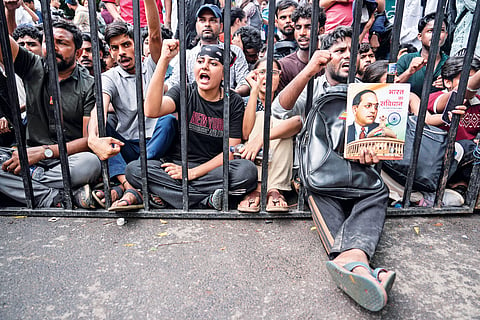
Sections of television media have had it coming for a long time now. The reporters of some pro-government television channels covering the protest by Cockroach Janata Party at Jantar Mantar had to face the wrath of the protestors.
The media owners and their star “anchors” are safely ensconced in air-conditioned offices beyond the reach of young protestors on the street. In the information war too, it is the foot soldiers, the young and unknown reporters who pay for the sins of their bigwigs, who are the real purveyors of poisonous propaganda. It must be pointed out that the heckling was selective and not indiscriminately against all journalists.
In fact, the discerning protestors showed due respect and appreciation towards independent journalists and their professional journalism.
The Editors Guild of India has rightly said that biased reporting by media cannot justify violence against journalists. The problems of sections of media, especially those who indulge in rabid propaganda, are self-inflicted. Television channels willingly jump on the bandwagon driven by the BJP IT cell and assorted right-wing trolls aimed at demonising legitimate dissent, protest movements and democratic grassroots struggles. Besides the blurring of the line between ruling party spokespersons and anchors, the latter want to be more loyal to the king, much to the viewers’ chagrin.
The blatant defence of the government against any criticism and brazen and unjust targeting of the Opposition have touched new lows over the years. The hateful political messaging apart, the media sowed seeds of communal hatred against minorities. The Editors Guild referred to the consequences of “flawed and biased” reporting and averred that “openly catering to the dictates of vested interests or even the government flies against the principles of responsible journalism.”
It is an open secret in the corridors of power how the government is obsessed with headline management and narrative control. Over the years, the television media would crawl, and most of the print media would bend at varying degrees even before they are asked to. Of course, the print media is not as brazen and virulent as their broadcast counterparts, but they too are often criticised for their acts of deliberate omission rather than commission, that is, not giving due space to the Opposition or playing a watchdog role, and both indirectly favour the government.
Ideally, the media should regulate itself. But the independent and self-regulatory body, the News Broadcasting and Digital Standards Authority (NBDSA), has not been effective, and its strictures against TV channels for violating codes on communal harmony, neutrality, and impartiality are reduced to performative irrelevance.
Heckling and attacking some reporters is no doubt wrong, but it begs the question of how else the public could express their anger and disagreement. In protest, many simply stopped watching television news channels. Besides declining viewership, a relatively more accurate indicator, and the one that media barons understand better, is the rising financial losses. Ironically, it only makes them depend more on government advertising and thus pushes them deeper into the State’s lap. The media knows what it is doing and the public reaction to it. Thus, there are hardly any takers for its fake righteous indignation and injured innocence. Eventually, the focus will shift from the puppets, and the realisation may dawn that if the puppeteers fail to reform, then the only recourse left will be change.
