
- Chennai
- Tamil Nadu
- India
- World
- EntertainmentEntertainment
- Business
- Sports
- Lifestyle
- Technology
- Videos
- Explainers
- Editor's Picks
It should not come as a surprise that India is the sixth most-polluted country in the world. The 2025 edition of the World Air Quality Report revealed that Loni in Ghaziabad is the most polluted city globally, with particulate matter levels exceeding WHO permissible guidelines by more than 22 times. Global South countries, especially those in South Asia, have reported increasingly higher levels of pollution. Pakistan, followed by Bangladesh, Tajikistan, Chad and Congo, sit at the top of this grim list. IQAir, the Swiss-based technology company that has been monitoring and reporting air quality, emphasises the need for rigorous, extensive monitoring and making the real-time data accessible to stakeholders for taking appropriate action.
It is true that India has far too few Continuous Ambient Air Quality Monitoring Systems (CAAQMS), pointing to limited coverage for a country of its size. In fact, there are significant gaps in coverage across many cities, let alone smaller towns and larger villages. To begin with, robust monitoring will help not only in identifying and mapping hotspots with high levels of pollution but also in pinpointing the sources causing the problem. Macro and pan-Indian data are crucial for evidence-based policy-making, framing regulations and taking targeted action. Even where monitoring systems exist, governments and political leadership often tend to be in denial, or wilfully cover up the severity of the problem by manipulating data emanating from CAAQMS to suit their narrative. Recently, in Delhi, the government was accused of manipulating the system by spraying water or using anti-smog equipment in the vicinity of monitoring stations to skew the data. Yet, these remain futile attempts as Delhi continues to figure prominently in global rankings.
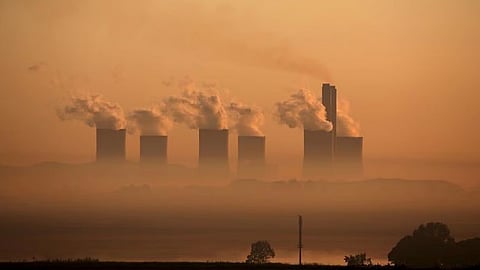
Another issue relates to misplaced priorities in the allocation of funds. The flagship National Clean Air Programme (NCAP) has an ambitious target of improving air quality by reducing pollution by about 40% from current levels across different states and union territories. These include 'non-attainment' cities — urban areas which fail to meet air quality standards over a period of five years. Despite industrial and vehicular emissions being the dominant drivers of air pollution, especially in urban areas where they account for three-fourths of the problem, only 1% of funds is earmarked to counter industrial pollution and another 13% for automotive emissions. Moreover, cities like Delhi have not been fully utilising the funds allotted to them.
The private sector is also not doing enough to help bring down air pollution, especially regarding the reduction of operational emissions. Addressing this requires serious research and development for the innovation of clean technologies and green solutions. Unfortunately, many companies tend to circumvent or dodge rigorous regulatory compliance, fearing it could put pressure on profitability and shareholder value.
There are no silver bullets, and quick fixes do not last. Clean air must not become a luxury reserved only for those who can afford air purifiers. India should look to replicate the successful pollution control models of countries like China. Politics should take a back seat, and science must be put in the driver’s seat. It is not too late to launch long-term initiatives that tackle the issue in a coordinated and holistic manner.
