
- Chennai
- Tamil Nadu
- India
- World
- EntertainmentEntertainment
- Business
- Sports
- Lifestyle
- Technology
- Videos
- Explainers
- Editor's Picks

NEW DELHI: The US-Israel war on Iran is now bobbing on uncharted waters after President Donald Trump clamped a blockade of Iranian shipping through the Strait of Hormuz. The President held out the containment as a threat even as talks between US and Iranian negotiators in Islamabad were about to end. This trait of issuing belligerent signals even while engaging in a dialogue for peace has become a recurring motif of Donald Trump’s dealings. We saw it in the leadup to the airstrikes on Iran on February 28, and before the bombing of three nuclear sites in June 2025. It suggests both duplicity of intent and the use of caprice as strategy.
In the context of the failed talks in Islamabad, this allows room for suspicion that there was no serious purpose in sending a delegation led by Vice-President J D Vance to the talks in the first place. It was perhaps just a move to get the President off the hook after his unhinged tweets threatening to wipe out the Iranian civilisation earlier in the week. Trump’s crude language and his plausibly deniable suggestion of a nuclear strike horrified his own MAGA base, triggering calls to his Cabinet to impeach him and entreaties to the military to defy him. The good offices of Pakistan were called upon post haste to arrange an undercooked ceasefire and a charade of peace talks was gone through.
The current blockade sets the war back to where it was: in a state of utter confusion as to its aims, and befuddlement over how to end it. In fact, experts are at a loss to make sense of a Catch-22: Here is America blockading the Strait of Hormuz to keep the Strait of Hormuz open, which was never closed in the first place. Under Trump’s erratic leadership, this war has already gone through so many twists its coils are in a bit of a tangle right now.
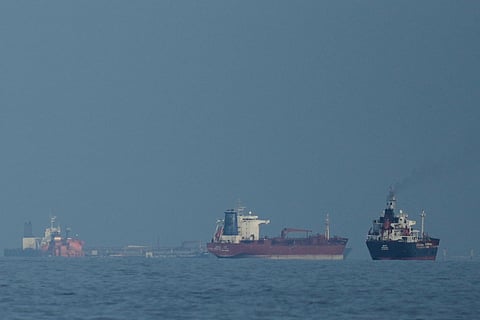
The blockade will require a huge armada, in addition to the two carrier groups already there, to enforce with no guarantee of a quick outcome photogenic enough for Trump. There are 2,400 km of Iran’s Gulfside coastline to be policed including at least 12 ports, big and small. Hormuz is one of the busiest choke points in the world with hundreds of tankers and merchant ships transiting daily. American naval assets will be challenged to identify and inspect every vessel heading to or out of Iranian ports without paralysing the lanes.
This is not a blockade America can do solo, and there is basis to believe that its Gulf allies will help. Also, after some polite noises, the usual suspects from NATO—UK, France, Italy—may come around because they fear Trump will kill the alliance if they don’t pitch in. Keir Starmer has already announced in his Parliament that he sees scope for UK diplomacy and then military involvement in the present conflict.
Even then, the operation is fraught with the risk of hostilities flaring up, which will expose US assets to Iranian missile attacks, thus posing the same question Trump has avoided answering so far: Do you want to put boots on the ground? There is one other danger inherent in the blockade, that of interdiction leading to disputes with third parties. As China is Iran’s biggest client, this sets up the possibility of America having to deal with Beijing.