
- Chennai
- Tamil Nadu
- India
- World
- EntertainmentEntertainment
- Business
- Sports
- Lifestyle
- Technology
- Videos
- Explainers
- Editor's Picks
Imagine a typical Tuesday morning in the near future. Before noon, the Unified Payments Interface (UPI) completes over a quarter-billion transactions protected by cryptography designed to withstand quantum computers rather than merely classical ones. Aadhaar validates a migrant worker’s SIM card, a farmer’s pension, and a student’s scholarship using infrastructure upgraded before it was necessary. If India views the coming years as a design window rather than a deadline, this outcome is fully achievable.
UPI, Aadhaar, DigiLocker, and the entire stack of Digital Public Infrastructure (DPI) — the architecture behind India’s digital decade — were built on cryptographic assumptions that will eventually be refuted by a sufficiently powerful quantum computer. It is a hard fact. The more intriguing question is what India does with the coming years, a challenge it is exceptionally well-positioned to address.
Run on a fault-tolerant quantum computer, Shor’s algorithm can solve the discrete-logarithm problem underlying elliptic-curve cryptography and factor large primes in RSA. These two public-key encryption families currently secure roughly 90% of internet traffic, including Aadhaar and UPI.
Fortunately, solutions exist. Standardised, tested, quantum-resistant algorithms are available today, years before experts expect cryptographically relevant quantum computers to emerge. Solving this is not about waiting for a scientific breakthrough; it is an engineering and coordination task — precisely the kind India’s digital infrastructure institutions have consistently resolved at an unmatched scale.
Urgency also works in India's favour. Under "harvest now, decrypt later" schemes, encrypted data collected today remains vulnerable until systems migrate. Every channel upgraded today eliminates that exposure window forever. Early migration is not merely defensive; it is a cybersecurity investment whose value grows with each year the transformation is underway.
Approved by the Union Cabinet in April 2023 with an outlay of Rs 6,003.65 crore through 2031, the National Quantum Mission rests on four thematic hubs: Quantum Computing at IISc, Quantum Communication at IIT-Madras with C-DOT, Sensing at IIT Bombay, and Materials at IIT-Delhi.
In February 2026, the Department of Science and Technology’s Task Force issued a national quantum-safe roadmap. This phased migration adopts the algorithms finalised by the US, mandating full post-quantum cryptography resilience in critical infrastructure with strict timelines.
The Department report focuses on cryptographic inventories, crypto-agility, and procurement mandates, treating nationwide migration as a delivery problem with a deadline rather than an open-ended research project. Consequently, India is now among the few nations with a formalised post-quantum cryptography transition plan, alongside the US, UK, EU, and Australia.
At the state level, Tamil Nadu is emerging as a pioneer in combining academic research, talent development, and access to hardware. Quantum computing education was mandated for the first time in India by Tamil Nadu via its Naan Mudhalvan initiative, partnering with global quantum platforms like Q-CTRL to build early technical capacity. Through the state-backed iTNT Hub located at Anna University, Tamil Nadu provides students and deep-tech startups direct access to real quantum hardware, fostering a local talent pool capable of developing quantum-safe software and applications.
To transform this solid roadmap into a global differentiator, India can refine its strategy across key areas.
First, India should maximise budget efficiency. The mission's budget covers computing, communication, sensing, materials, and migration combined. In comparison, the US allocated roughly $7.1 billion for federal migration alone between 2025 and 2035. However, India has a proven track record of building world-class infrastructure at a fraction of Western costs. Sharpening the budget framework will demonstrate once again that strategic planning beats haphazard spending.
Second, India must protect a critical head start. IBM’s research leadership in India notes that fault-tolerant systems should reach approximately 200 logical qubits by 2029 — matching the exact window when the national critical-infrastructure migration target closes. Securing infrastructure within this window is essential to safeguarding data against rapid hardware advances.
Third, India should lead with flagship systems. Giving the Unique Identification Authority of India and the National Payments Corporation of India prominent roles alongside C-DOT allows India to use its flagship platforms as testbeds. When lessons are learned on high-profile systems, they can be deployed seamlessly across the broader ecosystem.
India can apply its proven execution model — pioneered through the JAM trinity, Aadhaar enrollment, and UPI rollouts — to achieve quantum resilience through concrete execution steps.
To start, the nation must prioritise flagship systems by granting UIDAI and NPCI-funded mandates to lead post-quantum migration. Accelerating Aadhaar and UPI ahead of general enterprise timelines allows India to demonstrate hybrid classical-PQC authentication on systems the world already uses as digital infrastructure models.
Additionally, the Department of Telecommunications should leverage post-quantum cryptography in telecom procurement by making readiness a mandatory baseline for all future network equipment. This avoids expensive retrofits, converts compliance into cost savings, and signals to global vendors that India values future-proof hardware.
Finally, policymakers should separate migration and research budgets. Distinctly funding operational migration separately from long-horizon computing and sensing research allows both to proceed at maximum speed. Dedicated funding signals clearly to the global quantum sector that India intends to be a major buyer and builder.
The National Quantum Mission provides the necessary architecture: thematic hubs, a dedicated task force, and a phased roadmap aligned with global standards. Coupled with proactive state models like Tamil Nadu's workforce and infrastructure initiatives, the remaining step plays directly to India's core strength: executing complex ideas at population scale, faster than expected.
Over the past decade, India built the world's largest biometric identity system and premier real-time payment network. It possesses the institutional experience, delivery power, and an early lead on the roadmap. As nations worldwide navigate this shift, those viewing it as an opportunity to lead — rather than merely survive — will set global standards. India is uniquely positioned to be among them.
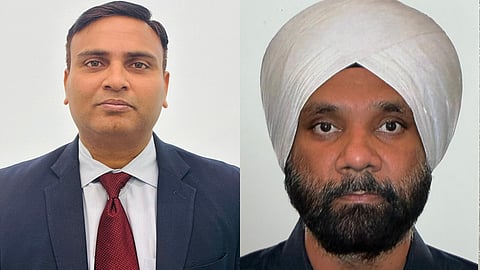
(Singh is AVP, GENPACT; Dr Gopalakrishnan is Founder, Infisum Modeling)
