
- Chennai
- Tamil Nadu
- India
- World
- EntertainmentEntertainment
- Business
- Sports
- Lifestyle
- Technology
- Videos
- Explainers
- Editor's Picks
Tech giants are setting records every few months for how much they are spending on artificial intelligence — but this time, some jitters are also growing.
On Thursday, Amazon said its capital expenditures totalled $53 billion in the second quarter, up 69% from a year earlier, as it built AI data centres and other infrastructure. It joined a parade of other big tech companies, with Meta on Wednesday reporting that its costs had risen 55% from last year, while Microsoft said its capital expenditures had soared 69%. Last week, Google also disclosed that its costs had jumped and said it would boost its spending further.
These numbers are only set to skyrocket. Across this year and next, Amazon, Google, Meta and Microsoft are expected to spend a staggering $1.5 trillion building data centres and stuffing them with advanced chips, according to Wall Street estimates compiled by FactSet.
“The scale of it is nuts,” said Melissa Otto, who leads research at S&P Global’s Visible Alpha division.
Alarms are rising as Wall Street and others question when this spending can be justified. On Thursday, Amazon’s share price rose almost 10% in after-hours trading after its cloud computing division experienced its fastest growth since early 2022, and shares of Microsoft, which did not change its spending forecast, jumped more than 15%.
But Meta’s stock sank more than 7% on Thursday after it revealed its AI outlays and that costs were growing faster than its revenue. And last week, for the first time since going public in 2004, Google said it had “negative free cash flow,” which meant it was spending more on day-to-day operations and building new infrastructure than it was taking in from its businesses. Google’s stock fell more than 6% the next day.
Even so, the companies insist they are doing the right thing. “As long as we see these attractive opportunities to invest, we will continue to invest,” Anat Ashkenazi, Alphabet’s finance chief, told Wall Street analysts last week.
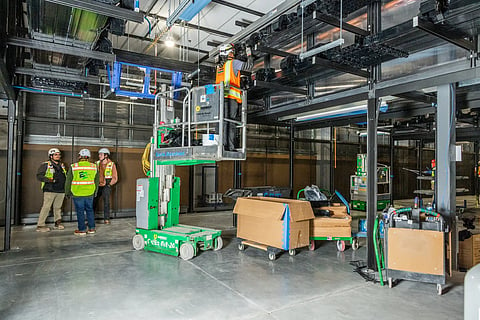
More than a dozen years ago, tech companies became the largest enterprises on the planet, fueled by their software and digital businesses. But AI has flipped tech’s “asset-light” model on its head. Multibillion-dollar data centres, which the industry likes to call “AI factories,” have become critical investments for developing advanced systems and making them available to customers.
From April through June, capital expenditures by the four companies totalled $170 billion, up 72% from a year earlier. The figures are ballooning — and projections keep rising every three months — as the companies race to open more data centres, and as the prices for necessary components like memory chips jump because of the demand. In April, Microsoft said soaring component prices would add $25 billion to its tab this year.
Despite all the building and spending, the tech giants say they still do not have enough computing power to meet demand. In effect, they say, they have been leaving money on the table.
“More capacity = more sales,” a Bank of America analyst, Justin Post, wrote last week in a research note after Alphabet, Google’s parent company, increased its spending forecast for this year by $15 billion to as much as $205 billion.
The pent-up demand has contributed to a backlog in signed contracts for Amazon, Google and Microsoft. Combined, that backlog reached almost $1.7 trillion, more than doubling from a year earlier.
Much of the growing backlog comes from partnerships with OpenAI and Anthropic, the leading AI startups. That means the fate of the giants rests in large part on the startups’ needing all the computing power they have requested, and their ability to pay for it. That poses a concentration risk, creating “a more circular system that could mask true demand,” according to Moody’s Ratings.
The tech companies have borrowed more than ever to fund the AI building boom. Yet they are also able to rely on their lucrative established businesses, like digital advertising, which rain down cash. Amazon's profit more than tripled to $62.6 billion, in large part because of the company’s investment in Anthropic.
“This party could go on for a while,” Otto said.
(The New York Times has sued OpenAI and Microsoft, claiming copyright infringement of news content related to AI systems. The companies have denied the claims.)
