
- Chennai
- Tamil Nadu
- India
- World
- EntertainmentEntertainment
- Business
- Sports
- Lifestyle
- Technology
- Videos
- Explainers
- Editor's Picks
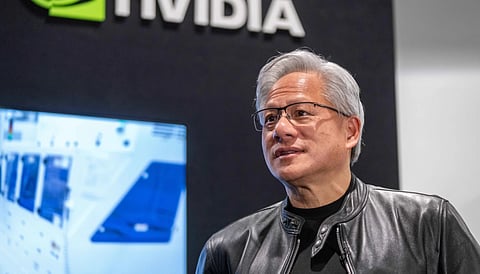
Nvidia's recent boardroom drama raises a question that goes well beyond Jensen Huang. The Board unanimously accepted his resignation. Less than two weeks later, the same Board unanimously reinstated him.
Did new evidence emerge? Did the Board's assessment of his conduct change? Did the national security concerns disappear? Or did the commercial and strategic consequences of losing one of the world's most influential technology leaders become too difficult to contemplate?
We do not have all the answers. And that is precisely the problem.
A Board has two fundamental responsibilities: appoint, evaluate and, if necessary, remove the CEO; and protect the long-term interests of the institution and its shareholders.
It cannot discharge the first responsibility without credibility in the second.
Unanimity on two diametrically opposite decisions does not demonstrate sound governance. It raises questions about the quality of the decision-making process. There are two extremes that corporate governance must avoid.
Board dictatorship: Directors become so powerful that they can remove a founder or CEO without adequately considering the consequences or explaining their reasoning.
Founder dictatorship: A successful founder becomes so powerful that the Board is reduced to a rubber stamp.
Neither is good governance. But there is a much larger dimension to this particular episode. Nvidia is no longer just a successful semiconductor company. It has become a foundational pillar of the global AI ecosystem. Its technology is influencing how economies, businesses, governments and even national security strategies will evolve.
The world is entering an era where access to computing power could become as consequential as access to energy and capital. This makes Nvidia a company of extraordinary strategic importance. And the greater the importance of an institution to the world, the higher the standards of governance expected of it.
Its Board cannot afford to make decisions that appear reactive, inconsistent or inadequately explained. The stakes are simply too high.
There is another issue worth examining. Several Nvidia directors have been on its Board for decades. Institutional memory is valuable, but familiarity can sometimes become complacency. Long tenure must not come at the cost of independent judgement.
I would therefore expect a governance reset:
An independent investigation into how the original decision was made and why it was reversed. A genuinely independent and effective Chairmanship. A reconstitution of the Board, bringing in fresh perspectives on technology, geopolitics, national security and corporate governance. A credible succession plan that does not depend on Jensen remaining CEO indefinitely. Stronger oversight of export controls, national security risks and the company's broader geopolitical responsibilities.
And here is the larger lesson.
The Board exists to protect the institution, not its own positions. The CEO exists to lead the institution, not own it.
Jensen may have made serious personal and professional mistakes. That does not absolve the Board of its responsibilities. Equally, the Board's failure does not absolve Jensen of his.
I would particularly like to see Harvey Jones, Nvidia's chairman, answer one question: If the Board genuinely believed Jensen was unfit to lead Nvidia on November 12, what objective evidence persuaded all its members that he was fit to lead it on November 23?
Until that question is answered convincingly, the unanimous reinstatement is not a demonstration of good governance. It is an admission that the Board's decision-making process needs to be examined.
The ultimate test of corporate governance is not whether a Board can remove a powerful CEO. It is whether it can exercise independent judgement without becoming either his adversary or his subordinate.
That is what separates a great company from a great institution.
Ravichandran is an independent director and ex-chairman, Hewlett Packard India; and ex-MD, ANZ Bank
