
- Chennai
- Election-2026Election-2026
- Tamil Nadu
- National
- World
- Cinema
- Business
- Sports
- Lifestyle
- Technology
- Videos
- Explainers
Winter in Antarctica is notoriously brutal. Temperatures remain well below freezing, and in many regions, the sun sets in April and does not reappear until August. Deprived of sunlight, traditional photosynthetic life, like plants and algae, cannot produce energy. Yet, life does not simply stop.
A new study in The ISME Journal reveals that Antarctic microbes generate energy from the atmosphere at temperatures as low as –20°C. This discovery reshapes our understanding of how life survives at planetary extremes and how climate change might alter these resilient ecosystems.
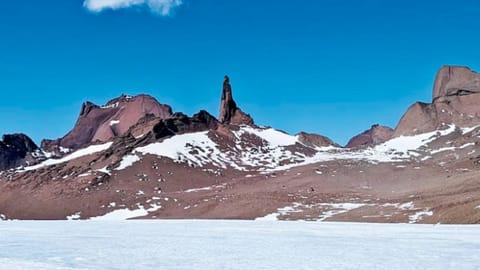
In 2017, researchers discovered that many Antarctic microbes generate energy from atmospheric gases at trace concentrations, a process known as “aerotrophy.” By utilising specialised enzymes to “sniff out” hydrogen and carbon monoxide, these organisms extract sustenance from the air itself—a massive evolutionary advantage in nutrient-poor desert soils. Until now, the thermal limits of this process were unknown. To investigate, we collected surface soil samples from East Antarctica between 2022 and 2024. By sequencing the DNA of these soil microbes, we identified which species were present and their metabolic capabilities.
Lab tests confirmed that aerotrophy occurs at both representative summer temperatures (4°C) and winter lows (–20°C). This proves that hydrogen and carbon monoxide are viable, year-round food sources. Surprisingly, we also found an unexpected upper limit: while Antarctic soils rarely exceed 20°C, some microbes continue generating energy from hydrogen up to 75°C. These organisms are adapted to the cold but not restricted by it. DNA sequencing shows that the vast majority of microbes in these soils possess genes to extract energy from hydrogen and carbon from the atmosphere. These “aerotrophs” function as primary producers, generating biomass from air.
In most terrestrial ecosystems, photosynthesis sits at the base of the food chain. However, in Antarctica’s arid soils, photosynthesis is rare. Aerotrophy likely fulfils this role instead. Unlike sunlight-dependent processes, aerotrophy functions yearround and does not require liquid water. As global temperatures rise, the rate of aerotrophy is expected to change. Under low-emissions scenarios, we predict a 4% increase in hydrogen consumption by these microbes; under high-emissions scenarios, that could spike to 35%. While hydrogen is not a greenhouse gas, it influences the atmospheric lifespan of gases like methane. Globally, soil microbes are responsible for 82% of all hydrogen consumption, acting as a critical “sink.” Understanding how these unique microbial communities respond to warming is a vital piece of the puzzle in predicting the resilience of Antarctica’s ecosystem.
The Conversation