
- Chennai
- Tamil Nadu
- India
- World
- EntertainmentEntertainment
- Business
- Sports
- Lifestyle
- Technology
- Videos
- Explainers
- Editor's Picks
Anilkumar Parat
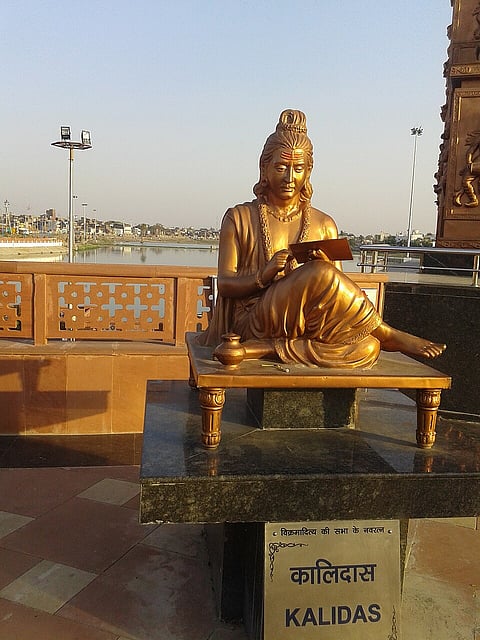
Almost fourteen centuries ago, India’s most celebrated poet, Kalidasa, opened one of his epic poems with a famous verse that captured the deepest truth he knew about language. He offered a prayer to the deities Shiva and Parvati, describing them as being united like Vaak (word) and Artha (meaning) — the ultimate example of a perfect partnership. To Kalidasa, these are not two separate entities that happen to coexist; rather, they define each other into existence.
This superb comparison is both beautifully simple and brilliant. The poet implies that a word and its meaning are born together. The word does not dictate the meaning, nor does meaning exist independently, waiting to be labelled by a word. They emerge as one.
We now live in a world increasingly shaped by large language models (LLMs) — systems of extraordinary linguistic fluency that write, reason, and create. An LLM possesses a highly sophisticated command of vaak (word). It has consumed more text than any human could read in a thousand lifetimes. What it lacks, however, is artha (meaning) in its fullest sense.
For Kalidasa, meaning is not just a dictionary definition. It is a felt phenomenon, embedded in real life and experienced through human consciousness.
LLMs have achieved advanced words without true meaning. The deepest anxieties about artificial intelligence are not ultimately about lost jobs or misinformation. The deeper concern is that we are building a vast digital world of highly persuasive language that is progressively disconnected from human experience.

Debates have raged for centuries regarding whether language shapes thought or merely reflects it. Thinkers have long argued that the language we speak influences what we can perceive and notice about reality.
Perhaps nowhere is this better demonstrated than in multilingual individuals, who perceive the world through unique cultural lenses. For instance, a native speaker of an Indian language might understand a culturally specific term through a deeply layered social context. An LLM, at best, translates it literally and appends a few dry notes. It entirely lacks the lived, inherited experience of a human being. Where the AI fails is precisely in this lack of felt meaning beneath its fluent words.
While LLMs can produce text across multiple languages, their conceptual core remains anchored to a dominant Western tech tradition. Multilingualism in an AI is closer to high-speed translation than to genuine cultural understanding.
Ancient Indian philosophers were deeply suspicious of the idea that language is merely a neutral vehicle for pre-existing thoughts. The sophisticated position, compressed so elegantly into Kalidasa's single, powerful metaphor, is that words and meaning are entirely mutual.
In many ways, these centuries-old insights mirror modern artificial intelligence research. Tech experts increasingly recognise that an AI's reasoning capabilities cannot be improved simply by feeding it more text. It needs to be grounded in something real. The current frontier of research focuses heavily on "embodied AI"—developing robots and models that interact with the physical world in an urgent attempt to provide real-world meaning to a system that currently possesses only fluent words.
What makes Kalidasa's insight so extraordinary is that he places it at the absolute beginning of his poem, as if to say: understand this fundamental relationship first, or you will misunderstand everything that follows.
That remains an impeccable warning for anyone thinking seriously today about artificial intelligence. Unless we understand that true language requires both the word and the lived experience behind it, our path forward will be profoundly mistaken. Kalidasa recognised this in the fourth century. We are still trying to work it out.
Anilkumar Parat is a Kochi-based writer with a keen interest in the intricacies of language, with a sharp focus on research