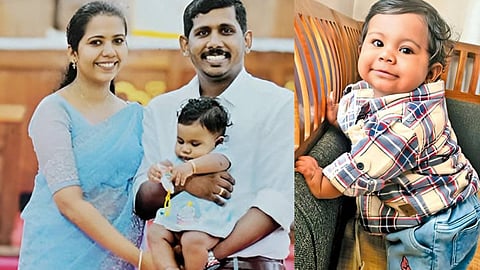

Awareness of organ donation has received a stupendous boost from the courageous decision by a Kerala couple to donate the organs of their 10-month-old baby after she was declared brain dead following a road accident. Not only have Aalin Sherin’s heart valves, liver, kidneys, and eyes given a new lease of life to four recipients, the gesture by her parents, Arun Abraham and Sherin Ann John, will be a stirring example to others.
The government of Kerala responded appropriately by according a State funeral to the baby with State and Union ministers attending.
The case attests to the success of states like Tamil Nadu, Kerala, and Telangana in spreading awareness of altruistic organ donation and helping to bridge the massive gap between need and availability.
Although big strides have been made since the Transplantation of Human Organs and Tissues Act was amended and adopted by all but two states in 2011, the organ donation rate in India remains below 0.85 per million population.
Globally, it is one of the lowest and compares poorly to the 48 per million population recorded by Spain. While 5,00,000 people require organ transplants annually, only a fraction receive them. It is estimated that about half a million people die annually due to the non-availability of organs.
Within this phenomenon, organ donation in India skews strongly to living donations (85%), meaning that donors are predominantly relatives of the recipients. Estimates are that 2,00,000 kidney transplants are needed but only 12,500 donations are made (mostly by living donors). The gap is wider in the case of heart and lungs.
For this shortfall to be bridged, it is imperative that altruistic donations be encouraged and rewarded.
The southern states, Tamil Nadu, Kerala, Telangana, and Karnataka, have done well in this respect but it has taken nearly 30 years of concerted efforts by the medical fraternity, NGOs, and policymakers to achieve progress.
Lack of awareness and religious and personal concerns regarding disfigurement continue to be formidable challenges.
While impressive progress has been made on logistical issues and medical protocols, some cultural skews remain, such as an astonishing gender disparity. Studies show that up to 80% of donors are women and 80% of recipients men.
The experience of successful states shows that awareness campaigns powered by shining examples like baby Aarin Sherin help a lot. The Kerala State Organ and Tissue Transplant Organisation has reported that donation pledges rise significantly after stories of organ donation appear in the press.
So do State honours for donors, as done by Kerala in the recent case. Tamil Nadu was the first State to accord full state honours to deceased donors.
Hospital staff line the corridors to pay a silent tribute as the donor is taken for organ retrieval and senior administration officials personally visit the grieving family.
Organ donation is essentially an emotional decision and policies to promote it must be tweaked accordingly.
Telangana, then the undivided Andhra Pradesh, was the first State in the country to work on this aspect of the problem in the 1990s by allowing trained grief counsellors to communicate with relatives and making them aware of donation options.
Experience suggests that organ donations are constrained more by lack of awareness rather than any scarcity of compassion. In fact, studies show that there’s an abundance of compassion, cutting across criteria of age, income, and creed.