
- Chennai
- Tamil Nadu
- India
- World
- EntertainmentEntertainment
- Business
- Sports
- Lifestyle
- Technology
- Videos
- Explainers
- Editor's Picks
Gwen Ansell
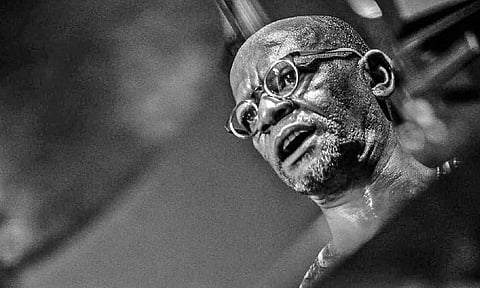
We use the term “Renaissance man” very loosely these days, for anybody even slightly multi-talented. But Lesotho-born jazz drummer, novelist and development scholar Morabo Morojele was the genuine article.
He not only worked across multiple fields but also achieved impressively in all. Morojele died on May 20, aged 64.
As a researcher into South African jazz, I encountered him initially through his impressive live performances. I was surprised to hear about his first novel and then, as a teacher of writing, bowled over by its literary power.
Celebrating a life such as Morojele’s matters, because a pan-African polymath like him cuts against the grain of a world of narrow professional boxes, where borders are increasingly closing to “foreigners”.
This was a man who not only played the jazz changes, but wrote – and lived – the social and political ones.
Born on 16 September 1960 in Maseru, Lesotho, Morojele was schooled at the Waterford Kamhlaba United World College in Swaziland (now Eswatini) before being accepted to study at the London School of Economics.
In London in the early 1980s, the young economics student converted his longstanding jazz drumming hobby into a professional side gig. There was a vibrant African diasporic music community, respected by and often sharing stages with their British peers. Morojele worked, among others, in the bands of South African drummer Julian Bahula and Ghanaian saxophonist George Lee. With Lee’s outfit, Dadadi, he recorded Boogie Highlife Volume 1 in 1985.
Studies completed and back in Lesotho, Morojele founded the small Afro-jazz group Black Market and later the trio Afro-Blue. He worked intermittently with other Basotho music groups, including Sankomota, Drizzle and Thabure, while building links with visiting South African artists. For them, neighbouring Lesotho provided less repressive stages than apartheid South Africa.
Morojele relocated to Johannesburg in 1995 and picked up his old playing relationship with Lee, by then also settled there. His drum prowess caught the eye of rising star saxophonist Zim Ngqawana. With bassist Herbie Tsoaeli and pianist Andile Yenana, he became part of Reedman’s regular rhythm section.
The three rhythm players developed a close bond and a distinctive shared vision, which led to their creating a trio and an independent repertoire. Later, they were joined by saxophonist Sydney Mnisi and trumpeter Marcus Wyatt to form the quintet Voice.
In 2006, after what he described in interviews as a series of false starts, he produced a manuscript that simply “wrote itself”.
'How We Buried Puso' starts with the preparations for a brother’s funeral. The novel, set in Lesotho, reflects on the diverse personal and societal meanings of liberation in the “country neighbouring” (South Africa) and at home. How new meanings for old practices are forged, and how the personal and the political intertwine and diverge. All set to Lesotho’s lifela music. The book was shortlisted for the 2007 M-Net Literary Award.
There was an 18-year hiatus before Morojele’s second novel, '2023’s The Three Egg Dilemma'.
For this powerful second novel, Morojele was the joint winner of the University of Johannesburg Prize for South African writing in English.
At the time of his death, he was working on his third fiction outing, a collection of short stories.
Morojele’s creative career was remarkable. What wove his three identities together – musician, development worker and writer – was his conscious, committed pan-Africanism and his master craftsman’s skill with sound: the sound of his drums and the sound of his words as they rose off the page.
Through his books and his (far too few) recordings, that beauty lives with us still. Robala ka khotso (Sleep in peace).
