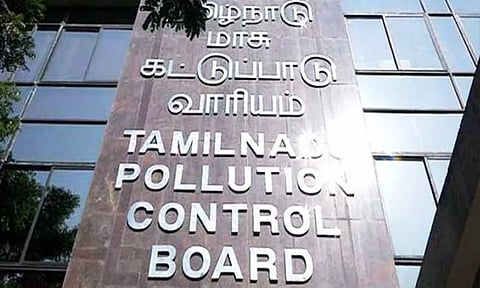

CHENNAI: The National Green Tribunal (NGT) issued a notice to the Tamil Nadu Pollution Control Board, directing it to file a report on land subsidence in Chennai. The principal bench issued similar notices to four other megacities in India, which are facing the issue of sinking of the land due to various factors, including excessive groundwater drawing.
The tribunal took up a suo motu case based on news articles published in various newspapers, including DT Next, and observed that satellite data from 2015 2023 shows India's five mega-cities (Chennai, Delhi, Mumbai, Kolkata, and Bengaluru) are subsiding - by more than 5 cm a year in some areas.
The scientific study, which the news reports were based on, had warned that Chennai and other megacities in the country - Delhi, Mumbai, Kolkata and Bengaluru – were affected by land subsidence (sinking). The researchers added that without stricter groundwater control and urban planning, thousands of buildings could face serious structural damage.
While issuing notice to the TNPCB and pollution control boards of other states, the NGT observed that the findings of the study have said that nearly 878 sqkm of land across five Indian megacities is subsiding. Due to this, structural damage could happen, it added. According to the researchers, there are 1.9 million people – roughly the population of Chandigarh – living in areas where the ground is subsiding fast.
Pointing out that the news articles raised serious concerns with regard to the safety of people and structures due to excessive exploitation of groundwater, which has serious long-term effects and the lack of recharge, the Principal Bench opined that the findings of the study indicated a violation of Ground Water Regulation and Water (Prevention and Control of Pollution) Act, 1974.
"The news item raises substantial issues relating to compliance with the environmental norms and implementation of the provisions of scheduled enactment," observed the bench comprising chairperson Justice Prakash Shrivastava and expert member A Senthil Vel.
The study, published in the Nature Sustainability journal in October, observed that in Chennai, the fastest subsidence rates surround floodplains of the Adyar river and the core city areas, including Valasaravakkam, Kodambakkam, Alandur, and Tondiarpet.
In the case of the core city areas, the widespread subsidence in the city centre was attributed to the compaction of alluvium deposits from Holocene fluvial sediments, especially in the floodplain of the Adyar river, which is characterised by sandy clay, silt and sand. However, it added, KK Nagar and Tondiarpet are subsiding due to groundwater extraction.
The study stated that Chennai is the second-fastest subsiding city among the five cities, and that as many as 97,946 buildings are exposed to a high damage risk in the far future (50 years).