
- Chennai
- Tamil Nadu
- India
- World
- EntertainmentEntertainment
- Business
- Sports
- Lifestyle
- Technology
- Videos
- Explainers
- Editor's Picks
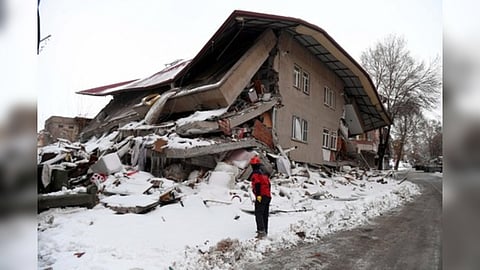
UNITED NATIONS: A snowstorm on December 31 in northern Syria hit 90 sites for the displaced, affecting more than 150,000 people, destroying or damaging 5,000 shelters, UN humanitarians said.
The UN Office for the Coordination of Humanitarian Affairs (OCHA) said its partners in the governorates of Aleppo, Idlib and Al-Hasakah reported the storm claimed the lives of two infants due to extreme cold.
Thousands of people were exposed to freezing temperatures at risk of hypothermia and respiratory diseases, OCHA said. Humanitarians have provided more than 10,000 displaced people in camps with stoves and fuel since the snowstorm.
The United Nations and its partners need $112 million for life-saving winter assistance from September 2025 to March 2026, OCHA said. So far, only $29 million has been received, leaving a 74 per cent funding gap, Xinhua news agency reported.
Winter in Syria can be extremely tough. Freezing cold winds, heavy rain, and sporadic snowfall combine together to create dire, and at times dangerous, situations for people across the country.
Displaced families are often the most affected. Because of the volatile economic circumstances they live in, most displaced families can only afford to build fragile, short-term structures as dwellings.
These structure are often built on barren ground out of carton, scrap wood or tarmac, leaving the people that live inside them vulnerable to the harsh weather of Syrian winters. At almost any time a dwelling can damaged by the winded, or be flooded because of rainfall or snowfall.
If the weather is particularly bad, it can destroy the fragile structures entirely, forcing camp residents to move locations and rebuild during the most difficult period of the year. Because of this, winter has become a season that Syrians in the north await with fear and caution.
The weather, and lack of shelter, can have a brutal impact on displaced families’ health.
