
- Chennai
- Tamil Nadu
- India
- World
- EntertainmentEntertainment
- Business
- Sports
- Lifestyle
- Technology
- Videos
- Explainers
- Editor's Picks
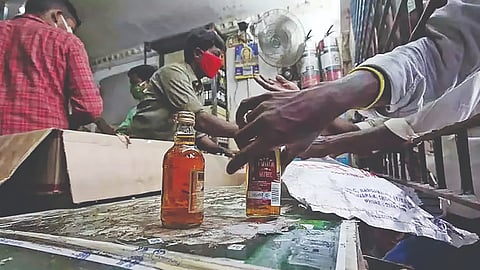
CHENNAI: The liquor bottle buyback scheme implemented by the Tamil Nadu State Marketing Corporation (Tasmac) to curb environmental pollution is perceived as a burden due to difficulties in returning bottles, especially in cases of consumption at home or other private locations.
The scheme, introduced following directions from the High Court, requires consumers to pay an additional Rs 10 per liquor bottle at the time of purchase. The amount is reimbursed only upon returning the empty bottle to the outlet. The initiative's objective was to protect the environment and prevent the littering of liquor bottles in public spaces, particularly in tourist destinations and forest areas.
According to a senior official, as of March 2025, Tasmac operates 4,787 retail liquor shops across the State. Of these, only 2,362 outlets have bars attached, while 2,425 shops function without bars, making it inevitable for customers purchasing liquor from outlets without bars to consume liquor at locations of their choice, including their homes, the official noted.
Over 30 per cent of liquor consumers in Tamil Nadu do not have access to bars attached to Tasmac outlets and therefore drink outside the premises, the official noted.
He further pointed out that rules governing the buyback scheme clearly state that customers should not be forced to pay the additional Rs 10 if they are unable to return bottles, such as when they travel to another State.
However, liquor salesmen at Tasmac outlets claim they have been instructed to collect Rs 10 per bottle uniformly, irrespective of whether the customer eventually returns the empty bottle or not, raising concerns that the scheme could generate significant additional revenue for the corporation.
Economist K Sriram said that if Rs 10 is collected per bottle from the 30 per cent of consumers who are unable to return bottles, Tasmac could earn several crores of rupees. He added that a precise estimate would be possible only if sales figures from shops without bars were made public.
Consumers, particularly those who are employed, say the scheme is impractical and pointed out that Tasmac outlets open only at noon, making it difficult for them to carry empty bottles to work and return them later in the day.
P Venkatesan, a painter working on the outskirts of the city, said that because he consumes liquor only at home, there is no feasible way for him to return empty bottles after work.
Meanwhile, sources in the Excise Department said physical verification of returned bottles was both time-consuming and unreliable. To address this, officials are considering the introduction of a digital tracking system using QR code stickers on liquor bottles to monitor returns more efficiently.
