
- Chennai
- Tamil Nadu
- India
- World
- EntertainmentEntertainment
- Business
- Sports
- Lifestyle
- Technology
- Videos
- Explainers
- Editor's Picks

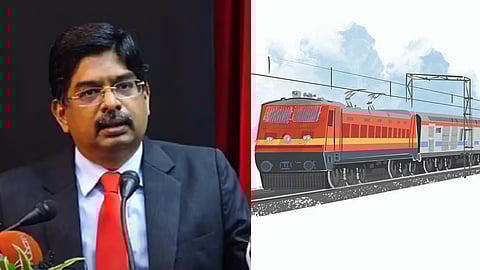
CHENNAI: Even as the Union government highlights a 7.5-fold rise in railway allocations to Tamil Nadu over the past decade, the State’s share has grown far more slowly than the national railway budget and several other States, prompting DMK Rajya Sabha MP P Wilson to accuse the Centre of step-motherly treatment.
In a post on X, Wilson referred to repeated statements by Railway Minister Ashwini Vaishnaw that Tamil Nadu was receiving substantially higher allocations under the present government compared to the UPA period. He countered that when viewed against the sharp expansion of the overall railway outlay, the relative increase for Tamil Nadu was modest and did not reflect parity with other major States.
The MP said that while the overall railway budget had expanded about 25 times between 2009–14 and 2025–26, Tamil Nadu’s allocations had risen only from Rs 879 crore to Rs 6,626 crore. Projecting the 7.5-fold increase in isolation, he argued, created a misleading impression of generosity towards the State.
To underline what he described as an imbalance, Wilson cited comparative figures for other States. Gujarat’s railway outlay had increased from Rs 589 crore to Rs 17,155 crore, a 29-fold rise, while Delhi recorded a 27-fold increase. Chhattisgarh and Madhya Pradesh saw 24-fold and 23-fold increases respectively. Maharashtra and Uttar Pradesh registered 20-fold and 18-fold growth, and Rajasthan, Odisha, Andhra Pradesh, Haryana and Bihar also recorded higher growth multiples than Tamil Nadu.
Calling for equitable treatment, Wilson said Tamil Nadu deserved allocations in line with national growth trends and timely execution of pending projects, rather than what he termed selective presentation of statistics to project performance.
Referring to a reply given by the Ministry of Railways to his parliamentary questions, Wilson said the Ministry had granted in-principle approval to transfer the Mass Rapid Transit System to the Tamil Nadu government, but admitted that the memorandum of understanding was still under preparation. This, he said, meant that the long-pending integration of Chennai’s MRTS with the Chennai Metro Rail network continued to remain on paper.
The MP also sought details on pending railway projects in Tamil Nadu, their allocations and the reasons for delays, and whether fresh tendering was being proposed for the Athipattu–Gummidipoondi additional line. He said delays in project execution pointed to a lack of urgency in addressing the State’s infrastructure needs.
India’s total railway outlay rose from an average of Rs 10,623 crore (2009–14) to Rs 2.52 lakh crore in 2025–26, a 25-fold increase.
Gujarat: Rs 589 crore to Rs 17,155 crore (29 times)
Delhi: Rs 96 crore to Rs 2,539 crore (27 times)
Chhattisgarh: Rs 311 crore to Rs 7,470 crore (24 times)
Madhya Pradesh: about Rs 652 crore to Rs 14,738 crore (23 times)
Maharashtra: Rs 1,171 crore to Rs 23,778 crore (20 times)
Uttar Pradesh: Rs 1,109 crore to Rs 19,858 crore (18 times)
Rajasthan: Rs 682 crore to Rs 9,960 crore (15 times)
Odisha: Rs 838 crore to Rs 10,599 crore (12.5 times)
Andhra Pradesh: Rs 886 crore to Rs 9,417 crore (11 times)
Haryana: Rs 315 crore to Rs 3,416 crore (11 times)
Bihar: Rs 1,132 crore to Rs 10,066 crore (9 times)
Tamil Nadu: Rs 879 crore to Rs 6,626 crore (7.5 times)
While the national railway budget expanded 25 times, Tamil Nadu’s allocation growth remained significantly lower than most major States.