
- Chennai
- Tamil Nadu
- India
- World
- EntertainmentEntertainment
- Business
- Sports
- Lifestyle
- Technology
- Videos
- Explainers
- Editor's Picks

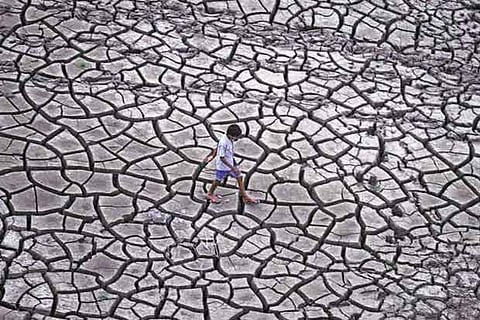
CHENNAI: With instances of extreme rainfall in a short span of time, induced by climate change, leading to flash floods, a top scientist and climate expert has warned that the country would experience more flash drought events, also due to rapid climate change.
Speaking in a workshop held in Chennai on Saturday, Madhavan Nair Rajeevan, vice chancellor of Atria University in Bengaluru and former scientist in the Indian Meteorological Department and Ministry of Earth Sciences, said that the frequency of concurrent hot and dry extremes is projected to rise by around five-fold, causing approximately seven-fold increase in flash droughts like 1979 by the end of the 21st century.
Flash droughts are rapid-onset droughts that intensify quickly during the monsoon season due to the lack of rainfall combined with high temperatures, leading to swift soil moisture depletion.
“Flash droughts cause rapid depletion in root-zone soil moisture and severely affect crop health and irrigation water demands,” Rajeevan explained.
He further added that not average monsoon rainfall but large multi-decadal variability (occurrence of floods and droughts) shows long-term trends. Extreme precipitation events and the length of dry spells have increased in recent years.
Pointing out that the monsoon prediction models and early warning systems need improvisation, Rajeevan explained that in future, the models suggest an increase in mean monsoon rainfall but also its variability. Intense precipitation events will increase in future, as well as flash droughts and dry spell events, he said.
“During the monsoon, rainfall does not occur on all the days of the season and all 24 hours of the day. It occurs only in a few hours, around 100 hours over northwest India, 300 hours over east central India and around 500-600 hours along the west coast and northeast India. Half of the seasonal rainfall occurs in just 25 per cent of total rain hours,” he noted.