
- Chennai
- Tamil Nadu
- India
- World
- EntertainmentEntertainment
- Business
- Sports
- Lifestyle
- Technology
- Videos
- Explainers
- Editor's Picks

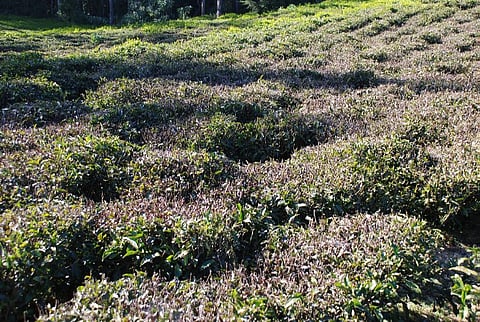
COIMBATORE: An intense spell of prolonged frost and biting cold has dealt a severe blow to tea production in the Nilgiris, stunting plant growth, slashing yields, and disrupting livelihoods across the hill district.
Tea growers say the unusually harsh frosting this season has damaged nearly half of the tea plantations in some pockets. “The impact has been far more severe than in previous years.
Earlier, farmers harvested an average of 400 to 500 kg of green tea leaves per acre in a month. Over the past two months of December and January, this has dropped drastically to around 100 kg per acre,” said C Manogaran, president of the Small Tea Producers Association of Nilgiris (SPANI). Last year, he noted, yields were relatively better at about 200 kg per acre during the same period.
With production at a standstill in many areas, farmers are now pinning their hopes on fresh leaf growth later this month to resume normal operations
While frost is common in higher altitudes such as Ooty and its surrounding areas, growers say this year it has spread with unusual intensity to regions like Kotagiri and Coonoor.
“Even Coonoor, which rarely records sub-zero temperatures, witnessed minus-degree conditions this season. Because of the steady drop in temperature, the tea plants have completely wilted away,” farmers said.
The impact has also been felt by a group of around 20 small growers who function as a cottage industry to manufacture premium tea, primarily green tea, from their homes. Pooling their produce, the farmers market their tea under a single brand in the domestic market.
However, the frost has hit both quantity and quality. “We didn’t get the quality of leaves required for premium tea due to the severity of the frost. I usually produce around five kg of orthodox tea a day. Now it has fallen to barely three kg a week,” said Ramakrishnan Kesalada, a farmer, adding that many leaves have withered before they could be processed.
As tea is classified as a cash crop, farmers are not eligible for compensation for weather-related losses. While crop insurance is available, small growers often avoid it due to high premiums and other constraints. With production at a standstill in many areas, farmers are now pinning their hopes on fresh leaf growth later this month to resume normal operations.
The production slump has also had a cascading effect on employment, leaving many involved in plucking and ancillary work temporarily jobless. Growers have reiterated their demand that tea cultivation be brought under the purview of the agriculture department, instead of the Tea Board, to enable access to state government subsidies and benefits.
However, officials of the Horticulture Department downplayed the extent of the damage. “The frosting did not have a major impact due to intermittent rains.
Any effect would be limited to tea gardens around Ooty,” an official said, adding that no formal survey had been conducted so far. The official also blamed farmers for cutting down shade trees in tea estates, which help mitigate frost damage, and suggested the use of sprinklers during early morning hours to reduce frost impact.