
Chennai
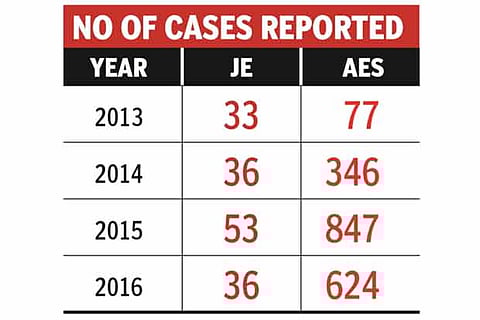
Acute Encephalitis Syndrome (AES) is a clinical condition caused by infection with Japanese encephalitis virus (JEV) or other infectious and non-infectious causes. AES cases have similar symptoms of JE, which is spread through mosquito bites. JE is characterised by fever and headache and in severe cases there is rapid onset of high fever, headache, neck stiffness, disorientation, coma, seizures, spastic paralysis and ultimately death.
The numbers released by the Department of Health and Family Welfare shows that there has been a steady increase in AES cases every year and JE cases have been consistent with numbers hovering around 60 cases. Tamil Nadu is one among the many states with an evident viral activity, according to the data provided by the National Vector-Borne Disease Control Programme. According to the World Health Organisation, “even if the number of JE-confirmed cases is low, vaccination should be considered where there is a suitable environment for JE virus transmission.” Dr K Kolandasamy, Director of Public Health and Preventive Medicine, says, “Children below the age of 15 years are being vaccinated compulsorily, as they are more susceptible.
Some of the districts covered in the vaccination programme includes Villupuram, Madurai, Tirunelveli, Virudhunagar, Tiruchy, Cuddalore and Tiruvallur. We have labs and diagnostic facilities to spot the disease effectively. Whenever there is a JE case reported, we undertake control measures.” “The state has been successful in preventing outbreaks, unlike other states. But the high number of AES cases call for increased surveillance,” says Dr S Elango, HOD, Department of Community Medicine, Chennai Medical College.
Visit news.dtnext.in to explore our interactive epaper!
Download the DT Next app for more exciting features!
Click here for iOS
Click here for Android