
Chennai
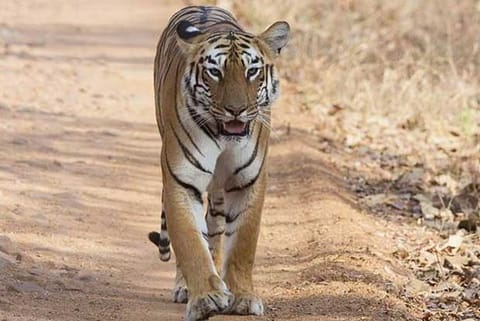
It was just last week that the Principal Chief Conservator of Forests (PCCF) had issued orders to shoot the animal dead as it was suspected of killing three other villagers.
It may be recalled that in March 2016, STF personnel had killed a male tiger in Devashola, The Nilgiris, where the tiger was known to have killed an estate worker. In 2018, an uproar was witnessed after a tigress named Avni alias T1, believed to have been responsible for the deaths of 13 people in Maharashtra over two years, was gunned down in Yavatmal. While Avni’s two orphaned cubs were rescued, activists condemned the operation as an act of trophy-killing. The big question here is what is prompting a spike in deadly man-animal conflicts across ecologically sensitive forest regions in India.
A few numbers could throw some light. In 2018, it was reported that as many as 10 man-eating tigers have been gunned down in India since 2012, while five animals had been tranquilised successfully and relocated as per guidelines of the National Tiger Conservation Authority. As per the 2018 census, there were 2,967 tigers in India, more than double the number from 1,411 in 2006. Interventions such as the amendment to the Wildlife Protection Act, turning the NTCA into a statutory body and introducing scientific methods to track the tiger population, have contributed to this increase. Today, India is home to 70% of the world’s tiger population. The number of tigers living within 50 reserves is 1,923, which is about 65 per cent of the total tiger population. And while the number of tiger reserves might have increased from just nine in 1973 to the current 50, the threat of man-animal conflict is heightened due to shrinking forest cover.
Scientists believe dispersal is an ecological requirement of the species, and tigers are known to move hundreds of miles in an attempt to mark their territories. They eventually stumble upon agricultural tracts of lands and regions of human habitation. The protected tiger reserves have been described by many experts as functional at best and degraded at worst, and they are completely saturated with no space for new animals. To top it off, villages in buffer zones of these reserves are prone to man-animal conflicts. Despite the NTCA scheme that funds relocation of buffer zone villagers, there seem to be few takers for such initiatives. Many villages are directly built upon core zones that are meant to be free of any human habitation as these zones facilitate the free movement of wild animals. And despite the Rs 10 lakh incentive offered to each displaced family, few villagers are keen to relocate.
The question of mega infrastructural development projects cutting into biospheres is yet another problem. Projects such as dams and highways are now violating the boundaries of core regions of tiger reserves which are just about 300-400 km in total. In the Union budget 2021-22, Project Tiger was allocated Rs 250 crore, a reduction of Rs 100 crore in the last two years from Rs 350 crore. Avoiding future man-animal conflicts will require us to build more tiger corridors to enable them to move from one reserve to the other sans hitches. Conservation must be prioritised on a par with development. The National Forest Policy has also targeted forest and tree cover for over 33% of the total geographical area of India. If implemented in letter and spirit, this could help bring down instances of human-wildlife conflict to a great extent. It will also help us stay true to the ethos of conservation, rather than having to kill endangered animals to resolve conflicts.
Visit news.dtnext.in to explore our interactive epaper!
Download the DT Next app for more exciting features!
Click here for iOS
Click here for Android