
- Chennai
- Tamil Nadu
- India
- World
- EntertainmentEntertainment
- Business
- Sports
- Lifestyle
- Technology
- Videos
- Explainers
- Editor's Picks

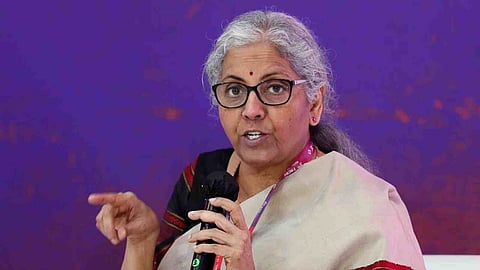
CHENNAI: Union Finance Minister Nirmala Sitharaman on Monday rejected Chief Minister MK Stalin's allegation that Tamil Nadu had been sidelined in the Union Budget 2026-2027, describing the criticism as deeply regrettable and politically motivated.
In a post-Budget interview with a television channel, Nirmala Sitharaman said the Budget contained several initiatives that would directly benefit Tamil Nadu and its people. "Are high-speed rail projects and agricultural schemes not meant for public good?" she asked, adding that targeted programmes for sandalwood and coconut farmers would bring substantial gains to the State.
Responding to Stalin's remarks on an alleged Aryan–Dravidian conflict, the Finance Minister said such narratives reflected a divisive mindset. "This line of thinking is unfortunate and has been repeatedly invoked over decades. It deserves condemnation, not endorsement," she said.
On why the BJP has not yet tasted electoral success in Tamil Nadu, Nirmala Sitharaman said the party was steadily expanding its base. "We are growing and we will win. Even the Congress, a national party, could not form a government in Tamil Nadu for over 60 years. The BJP's growth in the State is evident," she said.
Asked whether the BJP was apprehensive about actor Vijay's political foray, Sitharaman countered that it was the ruling DMK that should be concerned. "The DMK's anxiety is understandable, on one side is Vijay's entry into politics, and on the other, the NDA is gaining strength. This fear explains the spate of freebie announcements," she said, alleging a deterioration in law and order and a rise in drug culture in the State.
Defending the Budget against broader criticism, Nirmala said India was navigating an era of unprecedented global economic and political upheaval marked by tariff wars, geopolitical conflicts and volatile markets. "Stability is crucial, and this Budget prioritises that," she said.
She stressed that the Budget was not merely an annual financial statement but the first of the second quarter of the 21st century, aligned with the long-term vision of achieving a developed India by 2047. "Reforms do not end with announcements. They are a continuous process. Judge us by the government's overall performance, not by isolated Budget provisions," she added.