
- Chennai
- Tamil Nadu
- India
- World
- EntertainmentEntertainment
- Business
- Sports
- Lifestyle
- Technology
- Videos
- Explainers
- Editor's Picks

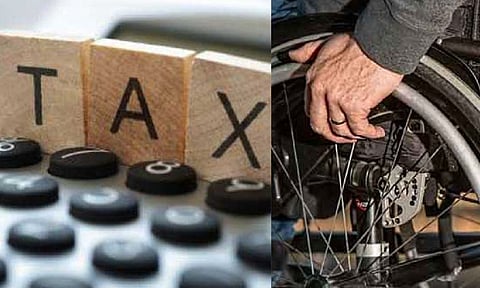
CHENNAI: As the GST Council prepares to meet on September 3, disability rights groups from Tamil Nadu have once again renewed their demand for the removal of the 5% tax on wheelchairs and other assistive devices for persons with disabilities.
The issue has been pending since the debate in 2017, when activist Nipun Malhotra approached the Supreme Court challenging the levy. He argued that taxing essential mobility and accessibility aids violated Constitutional rights to equality, non-discrimination and dignity. The case is still being heard, but fresh representations continue to reach the Centre.
Under the current GST regime, assistive devices such as wheelchairs, crutches, prosthetic limbs, hearing aids, and cochlear implants are taxed at a rate of 5%. Before the introduction of GST, most of these products were exempt from excise duty and state VAT. Disability rights groups argue that the tax system has effectively introduced a new burden where none existed previously.
In Tamil Nadu, political representatives and activists argue that the demand is not new, but it must be taken seriously. Deepak Nathan, state secretary of the DMK's differently-abled wing, recalled that former Finance Minister Palanivel Thiaga Rajan and DMK MP Kanimozhi had earlier raised the issue. "The state has a duty to protect persons with disabilities. We have signed the UN Convention on the Rights of Persons with Disabilities, and access to assistive devices is a right. The Centre must remember what they are taxing," he said.
Namburajan, national working president of the National Platform for the Rights of Persons with Disabilities, pointed to the steep costs. "Aids and appliances for disabled people are already costly. A good prosthetic leg can cost around Rs 3 lakh, which is affordable only by a handful. Even a motorised wheelchair costs around Rs 25,000. Many people with disabilities come from low-income families. For them, a wheelchair is not a product; it is their leg. How can you tax a person for his leg?" he asked.
Globally, several countries, including Canada, the UK, and Australia, exempt disability aids from taxation. In India, however, families must pay out of pocket even for basic mobility support. For instance, a motorised wheelchair costing Rs 1.5 lakh attracts an additional Rs 7,500 in tax, while a high-quality prosthetic limb of Rs 3 lakh carries a tax of Rs 15,000.