
- Chennai
- Tamil Nadu
- India
- World
- EntertainmentEntertainment
- Business
- Sports
- Lifestyle
- Technology
- Videos
- Explainers
- Editor's Picks

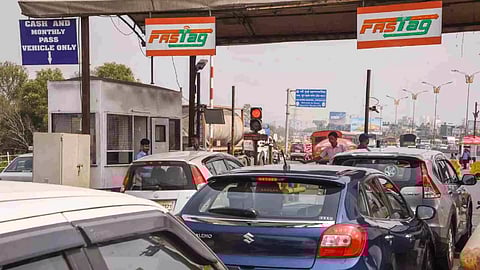
CHENNAI: The Union government's move to roll out an annual FASTag pass for private vehicles would benefit frequent travellers but it could shave off four to eight per cent of toll revenues for private road operators, according to a Crisil Ratings analysis.
The rating agency noted that the new system may lead to a short-term revenue dip that the National Highways Authority of India (NHAI) would need to compensate for.
The annual pass, priced at Rs 3,000, will come into effect from August 15, and will be valid for 200 trips or one year, whichever comes first. It will apply to private vehicles - cars, vans, and jeeps - on national highways and expressways.
Crisil estimates that private vehicle users currently pay Rs 70 to Rs 80 per trip. With the pass, this would translate into savings of up to 80 per cent or Rs 55 to Rs 65 per trip.
"Private vehicles make up around 35–40 per cent of total traffic but contribute only 25–30 per cent of toll revenues," said Anand Kulkarni, director, Crisil Ratings. "If even a third of these vehicle owners opt for the pass, revenue losses could be in the range of 4–8 per cent. This will need to be addressed through timely compensation under the concession agreements."
The rating agency assessed 40 operational toll projects and said the credit risk profile of most would remain steady in the interim, thanks to adequate cash flow cover and liquidity buffers.
"There may be a lag in the compensation process," said Saina S Kathawala, associate director, Crisil Ratings. "If the first compensation is delayed by six months and a third of private vehicle users adopt the pass, the impact on debt service coverage ratios (DSCRs) this fiscal will be minimal. Most projects maintain liquidity for at least one quarter, which should cushion the blow."
Crisil also pointed out that, unlike the current real-time toll collection, the new system would require operators to receive post-facto compensation from NHAI. However, the agency added that NHAI's strong track record in timely payments for annuity-based projects should mitigate counterparty risk.