
- Chennai
- Tamil Nadu
- India
- World
- EntertainmentEntertainment
- Business
- Sports
- Lifestyle
- Technology
- Videos
- Explainers
- Editor's Picks

CHENNAI: "When my father died, it was like a whole library burned down,” wrote American avant-garde artist Laurie Anderson for her song ‘World Without End’. To paraphrase that haunting feeling, when a library closes down, it feels like the parent has died. For the bibliophiles here, this has come to become a depressingly routine feeling, having watched their beloved reading spaces disappear one after the other.
Many will still remember the pain of bidding farewell to the Apex Plaza branch of Landmark, the Eloor Lending Library in Pondy Bazaar, and Nalini Chettur’s Giggles bookshop at the Taj Connemara. The latest to join the list is the British Council Library, which is shuttering the physical place and moving to the virtual space.
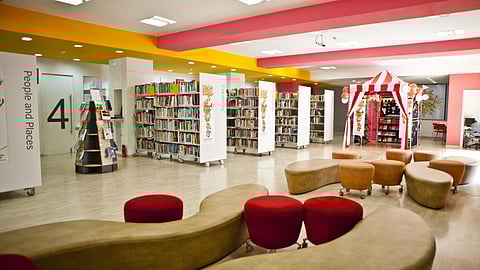
I was three when I first walked into the British Council Library (BCL) at 737, Anna Salai, in the late 1990s. I still remember being shushed if I even whispered, and my quiet happiness. I did not know then that I would keep returning to the same space, week after week, for almost two decades, growing up in its Young Readers’ section, a world of its own.
Much like Roald Dahl’s Matilda, I stared up at what then felt like towering shelves of children’s and young adult books. There were computers offering access to Harry Potter universe games. I spent countless hours there, reading books far beyond my years on bean bags and eating Indian flag sandwiches at their cafe. Beyond reading, I attended workshops and panel discussions that exposed me to art, creative writing, and debate. From Enid Blytons to Egyptian history, and later, masterclasses by foreign journalists, the library shaped my imagination and craft.
That is why the news of the BCL shutting its physical operations and vacating its premises feels so personal. For generations of readers, students, and scholars, it was not just a library, but a formative space.
Akhila V (30), a city-based patron, remembers spending most of her time as a child in the Young Readers’ corner, a snug area stocked with books and VCRs. “In a slower world, access to medium-speed internet and colourful online games was a massive pull,” she recalls. More than 20 years later, Akhila recently returned to the library with her toddler son to pick out books for him. The space felt deeply familiar.
This is where Dr KR Chidambara Kumarasamy (82), former principal of Government Arts College and Head of the Department of English at Presidency College, heard about a lecture by Chinua Achebe here, which later influenced his teaching of African literature. The library was central to English studies in Tamil Nadu, especially in the 1970s and 80s when, he recalls, a shortage of guides limited research opportunities.
In 1976, British Council held workshops at University of Madras, giving selected faculty access to books and academic discussions, opening pathways for research. “They trained us and introduced new ways of doing research,” he says, adding that this intervention helped the University of Madras influence the Directorate of Collegiate Education to introduce MPhil in English.
The library was central to Kuma- rasamy’s interdisciplinary research in British literature and psychology, as many of the books they needed were unavailable elsewhere. “People feel sad today when old theatres close because of nostalgia. The British Council Library is more than that. It has become an emotion.”
His daughter Dr Anupama C (52), an English professor at Women’s Christian College, recalls being allowed to walk into the British Council Library as a child and experiencing it as a “self-sufficient” space. “The Chennai library was far bigger and richer than the British Council library I saw in Kuala Lumpur in 2000,” she says. While she continues to value the workshops hosted by the British Council, she notes that “even if they continue in a different physical space sans books, they may not be as appealing as they were in the past.”
She credits the library with helping her clear the UGC NET in the 1990s, particularly the objective paper. “I had absorbed writers’ names and titles simply by browsing the systematically arranged shelves and remembering the books,” she says. She also recalls taking her son, who is now 20, to reading and personality development workshops when he was a child, while she spent time in the library. “It became valuable ‘me time’ for me.”
Speaking about the books that shaped her, Anupama says, “I shall miss the Critical Idiom Series, critical anthologies, History of English Literature by David Daiches, and Masterpieces in Digest Form, which were available only in the reference section. Indian writing in English also found its space, and a few years ago, I was delighted to see regional literature stacked on a shelf,” she adds.
Reflecting on the present, she adds, “People now hope that the British Council will reconsider closing its physical library or find another space. We don’t know what will happen.”
Dr Geetha G (56), a city-based professor, recalls the earlier decades when “it was impossible to have earned degrees in English literature without a British Council membership”. She says the library allowed her to access Nadine Gordimer’s complete fiction in the early 1990s even before Gordimer won the Nobel Prize. As a student, researcher, and later a teacher of literature, Dr Geetha found the library’s collection invaluable, particularly works by influential thinkers such as Samuel Huntington, Benedict Anderson, and Paul Gilroy. Among her most cherished memories is listening to British Somali author Nadifa Mohamed speak at the library in Chennai in 2013.
Even after the doors close and the library shifts to a digital-only offering, the British Council Library will continue to live on in the generations it nurtured.