
- Chennai
- Tamil Nadu
- India
- World
- EntertainmentEntertainment
- Business
- Sports
- Lifestyle
- Technology
- Videos
- Explainers
- Editor's Picks

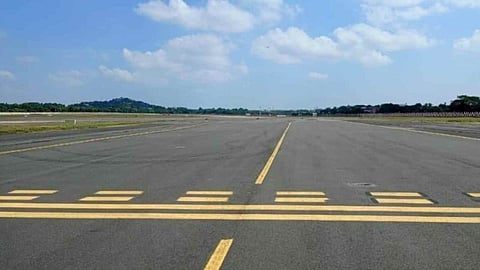
CHENNAI: The Airports Authority of India (AAI) has decided to begin major resurfacing work on the primary runway at the city airport in early 2026. Officials say the work may take more than 6 months to complete if carried out alongside regular flight operations.
At present, Chennai Airport handles more than 470 flight movements a day and operates with two runways. The main runway is 3.66 km long and the secondary runway is 2.89 km.
The airport also has around 130 aircraft parking bays, of which about 60 are used for domestic and international passenger operations. The remaining bays used for cargo aircraft, private jets, air ambulances, and aircraft parked for long-term maintenance.
In recent years, several infrastructure upgrades have been carried out to improve aircraft movement and reduce delays. Taxiways connecting the runways to parking bays have been redesigned and widened, allowing aircraft to move faster after landing. A curved taxiway was straightened, and additional holding points were created near the runway to enable smoother landings without delays from aircraft still taxiing. Cargo aircraft parking areas have also been expanded, increasing handling capacity.
Despite these improvements, runway resurfacing remains a critical safety requirement. As per aviation norms, runways must undergo complete resurfacing roughly once every 10 years.
At Chennai airport, the main runway was last resurfaced in 2015, while the secondary runway underwent similar work in 2024. With the main runway now due for renewal, AAI has begun preparations to award contracts for the project, with work expected to start around January 2026.
Airport officials explained that if the main runway was closed entirely and resurfaced without flight operations, the work could be completed within 30 to 45 days. However, this was not feasible because the secondary runway cannot be used at full capacity as an alternative.
Although the secondary runway is 2.89 km long, only around 2 km was usable for aircraft operations. The remaining stretch cannot be used due to approximately 176 obstacles in the surrounding areas, including high-rise buildings, telecom towers, and tall trees. Until these obstacles are removed, the secondary runway cannot fully replace the main runway during maintenance work.
As a result, AAI has decided to carry out resurfacing of the main runway in phases, while keeping flights operational. This approach is expected to extend the duration of the work to six months or more and may cause occasional delays in flight operations.
Airport authorities said that runway maintenance was essential for flight and passenger safety and assured that the work will be carefully planned to minimise inconvenience. While some disruption is unavoidable, officials said efforts would be made to ensure that the impact on passengers and airline schedules remains limited during the 2026 resurfacing period.