
Chennai
Living in a world where food has become just a click away on a delivery app, the community of slow food movement warriors are attempting to get people to return to traditional and local foods.
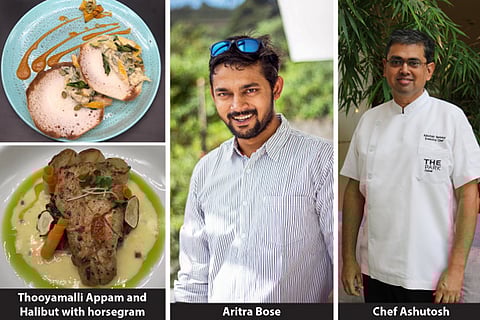
Slow food, Aritra says, includes watching whether the ingredients we source are ‘good’ (grown organically and healthily), ‘clean’ (whether we’re cooking them as early as possible) and ‘fair’ (whether the consumer and the producer benefit from the price). “Slow food doesn’t mean food has to be cooked for long hours as it’s commonly assumed. It is about living the slow life — taking time to get ingredients from a local market and cooking at home, and changing the mentality that food comes from a shelf. Even if we all changed one ingredient used daily —millets instead of rice, brown sugar instead of white — it helps the local farmers grow these traditional ingredients,” he asserts.
An ongoing food fest named ‘Go With the Slow’ is bringing forth a collaboration between The Park’s executive chef Ashutosh Nerlekar and Slow Food Nilgiris and Last Forest, a platform for products of tribals from the Nilgiris. The exchange of ideas for this fest has resulted in ingredients from the Nilgiris landing in Chennai to be used in a contemporary way. “I stumbled upon the movement by chance and wanted to spread awareness on it. Over the past two months, I worked on the concept and interacted with Aritra (who also manages Place To Bee, a slow food restaurant in Ooty). We sourced ingredients from Last Forest like ragi flour, sun-dried tomatoes, broad beans, wild green pepper, millets and jamun powder, to be showcased in the menu,” Ashutosh tells us.
The menu focuses on ingredients from the Nilgiris and around, instead of taking pride in foreign ones. Sun-dried tomatoes from the Nilgiris are used in a reimagined minestrone, that also features forest-grown avarakkai (broad beans), finger millet fettuccini, and charred locally-sourced watermelons. It’s an explosion of flavours — sour, sweet and smoky— and yet simple enough to let the ingredients shine.
There’s another dish of halibut, sourced from Kerala’s coasts, that heroes horse gram, whose popularity has receded over time, and wild green peppers from the forests. Jamun kulfi, which uses jamun powder also from the forests, comes as a sweet end to the meal. The menu, which also has biryani and Nilgiri korma slow-cooked in an earthen pot, is sure to change one’s perceptions about food. The fest is on at Six ‘O’ One till February 9 for lunch and dinner.
Visit news.dtnext.in to explore our interactive epaper!
Download the DT Next app for more exciting features!
Click here for iOS
Click here for Android