
- Chennai
- Tamil Nadu
- India
- World
- EntertainmentEntertainment
- Business
- Sports
- Lifestyle
- Technology
- Videos
- Explainers
- Editor's Picks

CHENNAI: Around 20.12 per cent of Chennai’s landscape even now comprises natural ecosystems like forests, wetlands, marshes, and beaches, revealed the City Biodiversity Index released by Chief Minister MK Stalin on Monday.
In its baseline year of 2024, the city scored 38 points out of 72 across 18 indicators. While the highest score was secured in the ‘proportion of natural ecosystems’ (20.12 per cent) indicator, the city also fared well in the ‘Connectivity of ecosystems’ indicator.
“Chennai’s network of wetlands, rivers, and green corridors earned it another top score, reflecting the ecological links that still aid biodiversity across the city,” a government release said.
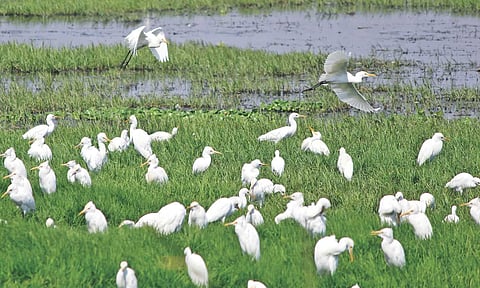
During the preparation of the index, 90 native bird species were recorded in built-up areas, and the city scored full marks in the ‘native bird species in urban areas’ indicator, thanks to its location along the Central Asian Flyway, a major migration route for birds.
Despite challenges like rampant urbanisation, Chennai continues to be defined by its unique green and blue assets, such as Guindy National Park, Pallikaranai Marsh, IIT Madras Campus, Theosophical Society campus, and MCC grounds, the release added.
“This outcome follows several initiatives by the Government of Tamil Nadu to conserve and restore ecosystems, including the Tamil Nadu Wetlands Mission, Green Tamil Nadu Mission, Tamil Nadu Climate Change Mission, and the Tamil Nadu Coastal Restoration Mission,” the government said.
The City Biodiversity Index, also known as the Singapore Index, was developed in 2008 and endorsed at the 9th meeting of the COP to the Convention on Biological Diversity (CBD). The Index helps cities measure, evaluate, and enhance biodiversity conservation through 23 globally recognised indicators.
The City Biodiversity Index acts as both a scorecard and a roadmap. It allows cities to assess their natural assets, track biodiversity trends, set conservation priorities, and integrate ecosystem health into urban planning.
The City Biodiversity Index for Chennai was developed in collaboration with ICLEI South Asia, the Greater Chennai Corporation (GCC), and other relevant State and city departments.
“For Chennai, this means balancing rapid urbanisation with the protection of its wetlands, green cover, and native species. The booklet presents data and a roadmap for integrating biodiversity into city planning and enhancing urban green cover, thereby contributing to carbon sequestration, heat mitigation, and improved public health. The Chief Minister has announced that the City Biodiversity Index for five more cities in Tamil Nadu will be developed,” the release said.