
- Chennai
- Tamil Nadu
- India
- World
- EntertainmentEntertainment
- Business
- Sports
- Lifestyle
- Technology
- Videos
- Explainers
- Editor's Picks
NEW DELHI: Tamil Nadu is in the forefront of electronics manufacturing as Foxconn, Dixon, Tata Electronics and Samsung are among the 22 new proposals approved by the government under the ambitious Electronics Components Manufacturing Scheme (ECMS), with a projected investment of Rs 41,863 crore and production worth Rs 2,58,152 crore.
The approvals - third set of clearances under the scheme - are expected to generate 33,791 new jobs, reduce India’s import dependence for critical electronic components, and accelerate the build-out of high-value manufacturing capabilities in the country. Taken together with previous ECMS tranches and ongoing semiconductor initiatives, the latest clearances underline India’s firm resolve to emerge as a major hub in global electronics supply chains.
According to sources, a large chunk of investments and employment will come from Apple’s new vendors, who are now joining its global supply chain. Some of them will be exporting to Apple’s international locations.
Notably, Motherson Electronic Components, Tata Electronics, ATL Battery Technology India, Foxconn (Yuzhan Tech India’s), and Hindalco Industries are five vendors from Apple’s ecosystem.
The approved projects are spread across eight states, including Andhra Pradesh, Haryana, Karnataka, Madhya Pradesh, Maharashtra, Tamil Nadu, Uttar Pradesh and Rajasthan, and reflect the government’s focus on geographically balanced industrial growth and expansion of electronics manufacturing across the country, according to the IT Ministry. At a briefing announcing the new set of investment proposals approved by the government, Union IT Minister Ashwini Vaishnaw underlined the Centre’s focus on big reforms, enabling policies, and efficient and speedy execution of projects and initiatives.
“The results are clearly visible sector after sector,” Vaishnaw said. The minister asked the industry to prioritise setting up design teams and nudged players to go for Six Sigma to be globally competitive.
In the latest batch, the maximum investments are set to come in the category of enclosures (mobile enclosures are structural housings that protect and support internal electronic components, widely used in smartphones and handheld devices), where three projects will attract Rs 27,166 crore worth of investments.
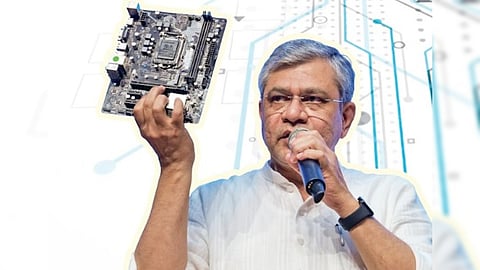
Nine projects fall in the PCB space (commonly used in consumer electronics, industrial controls, and automotive systems, among others) and would involve an investment of Rs 7,377 crore, while Rs 2,922 crore
investment would go into a lithium-ion cell project.
Li-ion cells are rechargeable energy storage components used to power portable consumer electronics, including smartphones.
Of 11 products, 5 are bare components, such as PCBs and capacitors.
