
Chennai
This lingers in the minds of many in the film industry. Most assume that if critics appreciate a film, it will automatically become a box office success.
Many differ and state that critics’ opinion does not matter much and it is the audience’s view that matters finally as they pay for tickets and decide the fate of a film. Where exactly does the truth lie? Let us look at various scenarios that exist on the matter.
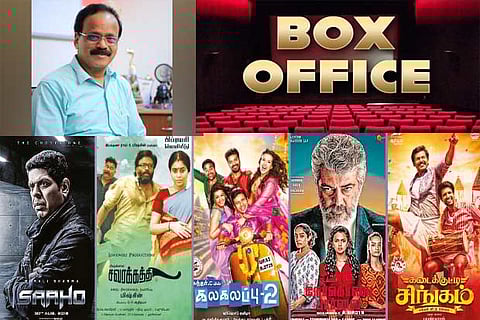
Both critics and audience reject a film: Several films, largely small budget ones, and a few big budget ones come under this category (Recent example: Saaho). Both, the critics and the audience, rejected these films outright and they could not be salvaged by anyone. These films were not made with good knowledge on both the cinema and the audience, and hence got rejected. An estimated 70 to 80 per cent of the total films fall under this category every year. These films could have been easily avoided being made had they understood the expectations of the critics or that of the audience.
Critics love film but audience were not so enthusiastic: Many critically-acclaimed films faced this situation of getting overwhelming appreciation from critics, but the audience were not so enthusiastic to watch them in theatres, leading to limited box office revenue. Right from Uthama Villain and Kaala to films like Iraivi, Savarakathi, Super Deluxe, Peranbu, Mehendi Circus, Seethakaadhi, Aadai, Jeeva, Nedunalvaadai, House Owner, Bakrid and many others faced this situation. Though these films might have received average response from the audience, their importance cannot be taken away in Tamil cinema and would remain spoken for their quality and theme.
Critics pan the film but audience love them: This is an interesting scenario, which is happening quite often in Tamil cinema. Recent examples can be Iruttu Araiyil Murattu Kuthu, Aranmanai 2, Kalakalappu 2, Kanchana 3, 100 the movie, Comali and many more. These films received average to poor reviews but audience made them a commercial success. Clearly, critics’ opinion on these films did not matter and rather, the audience liked these films, spread the word around, which brought in a larger audience.
Both critics and audience love the film: The best scenario to be in for films. Most commercially successful films fall under this category which were appreciated by both, the critics and the audience, unanimously. Recent examples can be: Mersal, Sarkar, Kaatrin Mozhi, Petta, Viswasam, LKG, Thadam, Dhillukku Thuttu 2, Kolaigaran, Nerkonda Paarvai and Sivappu Manjal Pachai. When both critics and audience love a film, their success is 200% guaranteed.
Mixed reviews (English reviewers liking a film and Tamil reviewers not and vice-versa) by media but audience love the film: This scenario is happening quite often where there is a clear divide between English media reviewers and the Tamil media reviewers. For Kadaikutti Singam, the English media did not give a thumbs up but the Tamil media did. For Tamizh Padam 2, the English media went gaga but the Tamil media was not enthusiastic. Yet, both films were successful as the audience loved them. That’s what mattered.
What do these scenarios indicate? It is not critics who determine the success of a film but the audience in each scenario. Critics are at best a catalyst in spreading the good word-of-mouth publicity for a film. But ultimately, large word-of-mouth publicity, both positive and negative, spreads only through the thousands in the audience who throng theatres to watch a new film. If they love a film, it becomes a success, irrespective of critics’ opinion as explained in above examples. Likewise, if the audience were not enthusiastic, it does not matter whether critics loved them or not, but the film fails at the box office.
The critics are all individuals and have their own likes and dislikes based on their knowledge levels and experience in cinema. Some play the role of paid reviewers too. Hence, there is no unanimous review even among critics and differences exist among them. Finally, it is the collective audience’s opinion which decides the fate of a film. If they are good, then there is nothing to worry. If they are bad, no one, including critics, can save a film at the box office.
Many popular directors, including Sundar C, stated that they never look at reviews by critics and only wait for the audience’s verdict as they feel their film’s fate is decided there. The focus of filmmakers should always be on the audience. If you win over the audience, it does not matter whether your film got a 2- or a 3-star rating from critics. Period.
— Dr G Dhananjayan is film producer, distributor and founder-director of BOFTA Film Institute
Visit news.dtnext.in to explore our interactive epaper!
Download the DT Next app for more exciting features!
Click here for iOS
Click here for Android