
- Chennai
- Tamil Nadu
- India
- World
- EntertainmentEntertainment
- Business
- Sports
- Lifestyle
- Technology
- Videos
- Explainers
- Editor's Picks
CHENNAI: The noise around AI will continue to get louder in 2026, in a year when some of our gadgets are likely to get pricier and new tech arrives to our TVs. We round up some of the trends that you’re likely to be hearing about a lot through 2026:
The relentless rise of AI: it’s been the most dominant tech trend over the last couple of years. Artificial Intelligence will continue to dominate the tech domain and reshape the world around us. While all tech companies are working towards AGI or Artificial General Intelligence where AI will eventually have the ability to understand, learn, and apply knowledge across any intellectual task that a human can perform. We might see the first baby steps in 2026 towards this direction. ChatGPT 6 is likely to drop in 2026 and Sam Altman (CEO of OpenAI) has already hinted that he sees memory as the key for making ChatGPT truly personal. According to him, most users want product features that require us to be able to understand them. It needs to remember your preferences and routines and adapt accordingly.
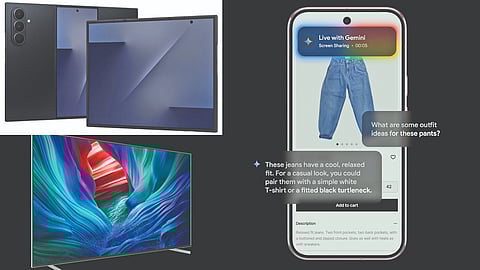
The ChatGPT vs Google Gemini battle will continue: we’re already seeing Gemini gradually take over in the Google search results over standard Google search. This is only likely to continue through 2026. The rumours continue to swirl about Apple’s ongoing discussions with Google about integrating Gemini into Siri. Apple Intelligence hasn’t quite delivered on its promise and this potential partnership could reshape on-device AI. ChatGPT continues to hold the edge in creative writing and structured reasoning while Gemini scores in real-time information and Google ecosystem integration.
The year foldable smartphones have been waiting for?
The leaks and rumours around Apple’s new foldable iPhone are gathering steam. Analyst Ming-Chi Kuo has suggested that we could see an announcement from Apple in late 2026 with a production ramp up by 2027. Leaked images suggest a 5.5-inch outer display and a 7.8-inch primary screen that might use Samsung Display’s crease-free experience. The big question is pricing and whether Apple’s upcoming foldable will be within the reach of its users and also be a key moment that will see foldables go more mainstream. Meanwhile Samsung has raised the bar with its Samsung Galaxy Z TriFold in December 2025.
Gadget prices are likely to increase more sharply in 2026: IDC reported in December 2025 that the global memory shortage crisis could have an impact on smartphone and laptop pricing in 2026 and most likely in 2027. Demand for memory chips from AI data centres is far outstripping supply and forcing reallocations that are likely to affect consumers. IDC predicts that global shipments of PCs could shrink by 9% in 2026 and smartphones could also see a 5% negative impact even as consumer prices increase.
The dawn of Micro RGB TVs: in August 2025, Samsung unveiled the world’s first Micro RGB TV. We’re likely to see more announcements from LG and Samsung around this new TV tech at CES (January 6 to 9, 2026) at Las Vegas. Micro RGB TVs feature minute red, green and blue LEDs that produce light directly in the desired colour at the back of the screen, a contrast from traditional LED TVs that use white or blue LEDs and are considered less efficient vis-à-vis Micro RGB TVs. This new TV tech also gets a boost from advances AI processors for additional frame-by-frame clarity and realism.
The other trends: 2025 showed us that most smartphones and smartwatches made only marginal hardware changes, this trend of iterative improvements is likely to continue in 2026. We’re likely to see more AI commercials, even though high-profile AI generated ads like the Coke global holiday commercial did get its share of haters and fans alike. AI-powered robots will continue to dominate tech headlines and physical AI companions could come into play for kids and lonely adults. Smart glasses could see more wider consumer adoption and launches, even though the jury is still not quite out in Silicon Valley whether these AR glasses are the future of personal computing.
(Ashwin Rajagopalan is a lifestyle writer and consumer technology expert. Catch the latest digital and tech updates in this weekly column.)
