
- Chennai
- Tamil Nadu
- India
- World
- EntertainmentEntertainment
- Business
- Sports
- Lifestyle
- Technology
- Videos
- Explainers
- Editor's Picks

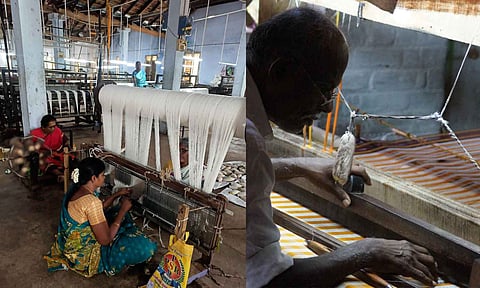
CHENNAI: At Gandhigram, the spinning wheel has never stopped turning. Founded in 1947, the Gandhigram Trust was inspired by Mahatma Gandhi’s vision of a self-reliant rural India built on simplicity, sustainability, and respect for labour. Khadi wasn’t just a fabric; it was a movement. And even after all these years, it still carries that same spirit. In recent times, Gandhigram Trust, located in Dindigul, has been quietly changing how people see khadi. The trust is working hard to shed the old image of khadi as stiff, rural, or only for traditional wear. Instead, they’re bringing in bold colours, fresh textures, and modern styles.
Breaking the old image
“In the last couple of years, we’ve really focused on changing how people see khadi. For a lot of folks, khadi is still connected to politicians or the freedom movement. Among young people, there’s this idea that khadi is just for traditional wear and that the fabric is rough and hard to handle,” says Shibu Shankaran, Deputy CEO of Gandhigram Trust.
But that perception is changing. “Today, khadi is much softer and more refined. Our latest designs are modern and fresh. We’re telling people that khadi isn’t just heritage, it’s fashionable. Plus, with climate change concerns growing, people are looking for eco-friendly options. Our process uses very little water and energy, no harsh chemicals, and leaves almost no carbon footprint. That’s something today’s youth really care about.”
A collaboration that makes sense
To take this change further, Gandhigram recently teamed up with Chennai-based brand Kaveri. Their new collection, The Songs of the Spindle, blends Gandhigram’s handspun khadi tradition with Kaveri’s fresh design approach. This partnership gives classic khadi a new life through vibrant colours and modern styles.
Working with designers isn’t new for Gandhigram, but the way they do it is shifting. “We used to let our artisans stick to the same patterns they’d followed for decades. Now we introduce new ideas, bolder colours, different textures and new weaving techniques. It’s not always easy though, since many of the artisans are older and used to traditional methods. We have to understand their limits, have conversations, and find what works,” Shibu explains.
They’ve started trying out new weave patterns, textures, and even yarn treatments to make Khadi look and feel more appealing. The goal is to create a fabric that fits all occasions, from everyday wear to casual outings and even formal events, something that a modern youth will not hesitate to wear.
The economic and social backbone
Gandhigram understands that for this craft to survive, artisans need to feel real value in what they do. “If we want to support artisans, the market has to accept their work and customers must be willing to pay a fair price. Right now, khadi is priced too low compared to the effort it takes. Handmade products should be seen as premium, but because of old perceptions and government subsidies, khadi is still seen as cheap. That needs to change.”
The community of artisans is shrinking too. From around 700 at one time, the numbers have dropped to 150 across khadi centres like Dindigul, Karur, Tirunelveli, and Tenkasi. But Gandhigram is opening doors for training. “Anyone interested in weaving can join our training classes at the Tenkasi campus,” Shibu says. Recently, they trained ten women, none from traditional weaving families. “We plan to create a weaving centre at Gandhigram where design, technique, and creativity come together.”
A big part of this is pride and visibility. “When artisans see their work appreciated and realise it’s part of something beautiful and valuable, it changes how they see themselves,” Shibu reflects. In the past, many weavers never knew where their fabric ended up. Gandhigram wants to change that: show them the final garments, introduce them to the customers, and share the finished product. That recognition builds dignity.
“For younger artisans, it’s not just about money. It’s about creativity, dignity and knowing that their work matters.” When young people see that they can contribute creatively and own the process, they may choose weaving not just because it’s a job, but because it’s a passion.
But fair pay is essential too. “We have to increase daily wages. Older artisans stayed because they didn’t have other options. Young people do. To bring them in, weaving must be a respected and viable career,” points out the Deputy CEO.
Designing change from within
For Aditi Jain, head textile designer at Gandhigram, the change is already clear. “Today, people pay more attention. Customers want to know about the material and how it’s made. Sustainable, handmade clothes are drawing more interest. Khadi also carries a sentimental value.”
She acknowledges the challenge of moving past the “old-fashioned” image. “Gandhigram is constantly evolving with new colours, textures, and techniques. We are also focusing more on ready-to-wear garments, knowing younger buyers often prefer finished pieces over just fabric. The latest collection is now available at Kaveri’s store in Chennai, giving more people a chance to connect with our vision. Each collaboration will explore a different design language, audience, and approach, expanding the narrative around khadi while continuing to support artisan livelihoods. Kaveri has carved a niche for herself in creating timeless women’s wear with a distinctive design language,” shares Aditi.
Designer Kaveri Lalchand states that the collection steers away from the expected silhouettes and colours of khadi. “We have worked with shades such as lilac, tangerine orange, and blue, and created garments in unique and contemporary styles for a distinct representation of khadi,” states Kaveri.