
- Chennai
- Tamil Nadu
- India
- World
- EntertainmentEntertainment
- Business
- Sports
- Lifestyle
- Technology
- Videos
- Explainers
- Editor's Picks

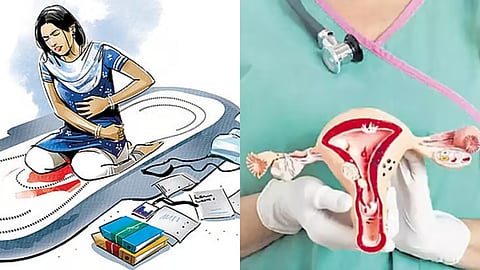
CHENNAI: She did not experience abdominal pain, irregular bleeding, or irregular menstrual cycle. The only change that the 24-year-old engineering graduate from Jayamkondam in Ariyalur district had was a slight bulge in the stomach, which she initially dismissed as weight gain. When the stomach area felt hard, she went for a test. After the clinical evaluation, she was diagnosed with stage 1 cervical cancer.
According to experts, regular and proper menstrual cycles should not be taken as a sign of complete reproductive health, as there are cases where cervical cancer develops silently without affecting menstruation in its early stages.
A first generation graduate in her family, the young woman had completed her engineering degree three years ago and secured a job at an automobile component manufacturing company in Gummidipoondi, bringing hope to her economically backward family. Her father is a farmer, mother suffers from rheumatoid arthritis, and brother works as a driver.
Following her health setback, she was forced to quit her job to undergo treatment. The family is now suffering not only with concerns over her health but also struggling to raise the money needed for her treatment.
Doctors say like her, many women delay screening or ignore early warning signs because they assume that regular menstruation indicates good reproductive health. However, cervical cancer often progresses without noticeable symptoms and may not immediately affect menstrual patterns.
Speaking to DT Next, Professor Dr Kalpana, director of the Adyar Cancer Institute, explained that menstrual cycles are usually affected in endometrial cancer, not necessarily in cervical cancer. That is, regular periods do not mean the cervix is healthy. If there is any lump, cyst, or unusual change anywhere in the body, medical attention should be sought immediately, she said.
Primary cause for cervical cancer is the human papilloma virus (HPV). Symptoms such as irregular bleeding and pelvic pain often appear only in later stages. In several cases, women continue to menstruate normally even after the disease has begun to spread.
Women should be aware of the importance of routine screening, including pap smear tests, which is a simple screening for cervical cancer that checks for abnormal cells on the cervix, and HPV testing, for women above the age of 21. Early detection will significantly improve treatment outcomes and survival rates, say doctors.
According to the World Health Organisation, cervical cancer remains one of the leading causes of cancer-related deaths among women in India. Last week, Tamil Nadu launched a free HPV vaccination programme, the first such initiative in the country. In the initial phase, Ariyalur, Perambalur, Tiruvannamalai, and Dharmapuri districts, which have a high incidence of this type of cancer, will be covered.
During this phase, the first dose will be administered to 27,000 children in these four districts, while the plan is to administer the vaccine to 3.38 lakh girls across the State.
Doctors said awareness is the first step towards prevention, calling for stronger public education campaigns and wider access to screening services.