
- Chennai
- Tamil Nadu
- India
- World
- EntertainmentEntertainment
- Business
- Sports
- Lifestyle
- Technology
- Videos
- Explainers
- Editor's Picks
Edmund White might have invented the unapologetic queer on the page. At least he did for me. Nothing coded gay, vaguely tragic; nothing furtive or metaphorical or obscured behind the billowing curtains of literary flounciness.
I can still recall the thrill of spotting the cover of his 1983 novel “A Boy’s Own Story” in a rotating rack of paperbacks in a bookstore in my dull, conservative hometown, Marlborough, England. I must have been about 15. It was the mid-1980s, the thick of the AIDS plague, and gay men were being cast as vectors of their own destruction.
It was a complicated time to be thinking about coming out. But here was a novel with a boy on the cover who looked close to my age, his thick glossy hair gently ruffled by the wind, his lips plump, his jaw strong. His tank top revealed the slope of his shoulders, the contours of his biceps.
I’d never seen a cover or read a book that spoke to me like that. The fact that a gay teenager could exist in fiction blew my mind. The fact that one, like me, could exist in the world did, too. “A Boy’s Own Story” was daring not just because it placed a queer adolescent at its centre, but also because it did so with sophistication, introspection and horniness. The narrator — clearly, as with all of his narrators, based on him — is vividly real.
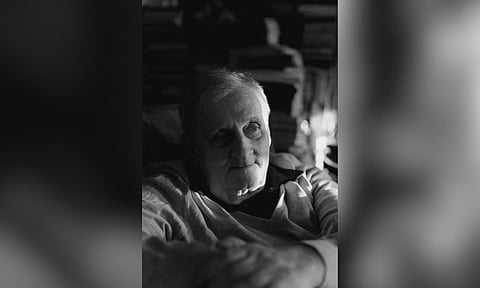
Ed White and I were later to become friends when I had moved to New York and was editing Out magazine. This was not a surprise: Ed, who died on Tuesday at 85, was always very open to meeting young literary men. He was a raconteur and had stories for miles. I lapped them up. We all did.
Talking frankly about sex was a hallmark of his writing. (Among his many nonfiction works was “The Joy of Gay Sex,” a sex manual he co-wrote in 1977.) He always saw himself as a gay writer for gay readers, the distinction he drew between his generation of queer writers and those who came earlier, like Gore Vidal and James Baldwin. They might write gay characters, but they never seemed to be writing for gay readers. Ed was.
The Stonewall riots of 1969, which he took part in, had reshaped him. Before Stonewall, “we had always thought of ourselves as a diagnosis, as a malady,” he once told me, echoing the medical establishment’s view of homosexuality. “Suddenly, it was all switched, and we were a minority. I saw myself as a freedom fighter. It mobilised my anger. I just think anger towards other people is better than self-hatred.”
His most recent book, “The Loves of My Life: A Sex Memoir,” published in January, continued that fight to just tell his story, both his own and also, though the details might vary, all queer people’s. Ed had no patience for prudes, and he loved to talk about young lovers who were “gerontophiles,” a word he clearly relished. He didn’t care for respectability. “Gay men have seldom been candid about their sex lives and are even less so now they are getting married and fathering offspring,” he wrote in a rather salty foreword to “The Loves of My Life.”
©️The New York Times Company
