
- Chennai
- Tamil Nadu
- India
- World
- EntertainmentEntertainment
- Business
- Sports
- Lifestyle
- Technology
- Videos
- Explainers
- Editor's Picks
• DAVID FRENCH
I’ve known conspiracy theorists my entire life. In fact, there’s probably a little bit of conspiracy theorist in each of us, myself included. We’re naturally drawn to mysteries, rumours of secret backroom deals and tales of intrigue. Some dive in more deeply and recklessly than others, but showing an interest in the story behind a story isn’t just human nature, it can also be a sign of healthy skepticism, and an unwillingness to take official or conventional explanations at face value.
When I was growing up, the father of one of my friends was fascinated by the JFK assassination. Another friend’s dad devoured accounts of UFO encounters. They weren’t weird or worrisome or dangerous men, just quirky and interesting. Under no circumstance were they a threat to American democracy.
But in recent years I’ve encountered, both in person and online, a phenomenon that is different from the belief or interest in any given conspiracy theory. People don’t just have strange or quirky ideas on confined subjects. They have entire worldviews rooted in a comprehensive network of misunderstandings and false beliefs. And these aren’t what you’d call low-information voters. They’re some of the most politically engaged people I know. They consume news voraciously. They’re perpetually online. For them, politics isn’t just a hobby; in many ways, it’s a purpose.
There is a fundamental difference between, on the one hand, someone who lives in the real world but also has questions about the moon landing, and on the other, a person who believes the Covid vaccine is responsible for a vast number of American deaths and Jan. 6 was an inside job and the American elite is trying to replace the electorate with new immigrant voters and the 2020 election was rigged and Donald Trump is God’s divine choice to save America.
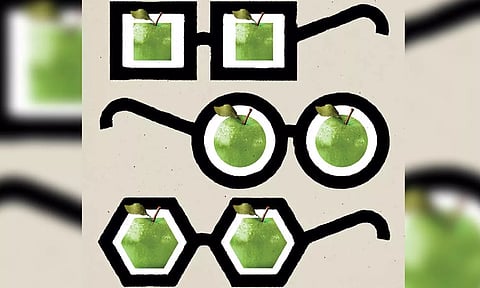
Such individuals don’t simply believe in a conspiracy theory, or theories. They live in a “bespoke reality.” That brilliant term comes from my friend Renee DiResta, the technical research manager at the Stanford Internet Observatory, and it refers to the effects of what DiResta calls a “Cambrian explosion of bubble realities,” communities “that operate with their own norms, media, trusted authorities and frameworks of facts.” It’s not just Twitter and Facebook. It’s not just cable channels or talk radio. It’s ubiquitous. Take YouTube, for example. DiResta writes that in 2019, YouTube hosted more than 8,000 channels with more than a million subscribers apiece. This means YouTube alone is sending a tsunami of content into the public square, algorithmically curated to provide subscribers with exactly the videos it predicts they’ll like.
Combine vast choice with algorithmic sorting, and we now possess a remarkable ability to become arguably the most comprehensively, voluntarily and cooperatively misinformed generation of people ever to walk the earth. The terms “voluntarily” and “cooperatively” are key. We don’t live in North Korea, Russia or the People’s Republic of China. We’re drunk on freedom by comparison. We’re misinformed not because the government is systematically lying or suppressing the truth. We’re misinformed because we like the misinformation we receive and are eager for more.
The market is very, very happy to provide us with all the misinformation we like. Algorithms recognize our preferences and serve up the next video or article that echoes or amplifies the themes of the first story we clicked. Media outlets and politicians notice the online trends and serve up their own content that sometimes deliberately and sometimes mistakenly reinforces false narratives and constructs alternative realities.
Then, as consumers interact with one another in these like-minded online spaces, they not only form new communities, they also begin shared journeys of discovery that construct, brick by brick, their new political, social and religious realities.
As DiResta writes in her upcoming book, “Invisible Rulers: The People Who Turn Lies Into Reality,” “Bespoke realities are made for — and by — the individual.” Americans experience a “choose-your-own-adventure epistemology: some news outlet somewhere has written the story you want to believe, some influencer is touting the diet you want to live by or demonising the group you also hate.”
In a media ecosystem so large and full of nooks so precisely tuned to your biases and desires, you can always find evidence, real or imagined, to validate your priors. Just as important, you’re also protected from receiving any information that might cause you to question those priors. Countless people have asked me, for example, why Republican voters remain so loyal to Trump in spite of his eye-watering displays of corruption and misconduct. And while there are certainly some people who support Trump even though they know chapter and verse about his misdeeds, vast numbers of others are shockingly ignorant of all that he’s done. Their bespoke reality simply doesn’t include that information.
In fact, I’d argue that the more politically engaged you are, the harder it is to avoid bespoke realities. The most politically engaged of us are going to spend a disproportionate amount of our spare time perusing political media, much of it online. And each algorithm will notice our political preferences and try to feed us content that matches those preferences. It’s important to recognize that no person or movement is immune to the temptations of bespoke reality. We’re all vulnerable, including me, and we should not presume that we possess the innate character, wisdom and insight to avoid the comfortable falsehood in favor of the difficult truth. Rather, I recognize that I’m vulnerable and take specific steps to try to challenge my priors.
Unless we strive to be self-aware, and sometimes even when we do, we fall prey to our own human nature and the algorithms designed to feed us our expressed preferences. Bespoke reality is the path of least resistance. It’s what feels natural. It’s what feels comfortable. Understanding the real world, by contrast, requires effort. It requires us to challenge ourselves. And it requires us to accept an alarming reality: In the midst of this “Cambrian explosion” of information and outlets, our own curiosity and quest for insight — the very tools on which we’ve relied to dig for the truth — can instead lead us astray.
