
- Chennai
- Tamil Nadu
- India
- World
- EntertainmentEntertainment
- Business
- Sports
- Lifestyle
- Technology
- Videos
- Explainers
- Editor's Picks

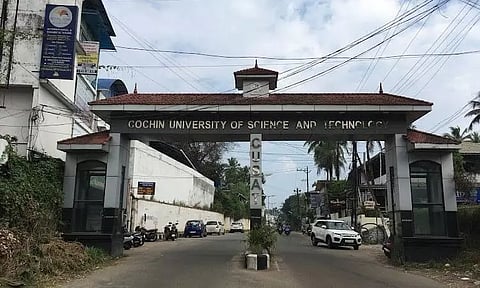
In a tragic addition to the list of casualties emerging out of India, on account of crowd control failure, four students lost their lives, while dozens were injured in a stampede-like situation that ensued during the annual tech festival of a university in Kerala. Students of Cochin University of Science and Technology (CUSAT) had gathered in large numbers to attend an open air concert of a popular singer at an auditorium located in the campus. Due to sudden downpour, attendees made a dash for the stage, where there were some roofed areas, which led to the stampede.
Queries have been raised regarding lapses on part of the event managers. In this case, neither student organisers, nor university officials had sought permission to conduct the event, or intimated the police. The organisers had thrown caution to the wind, as they had not anticipated the crowds that would gather at the auditorium, which had a seating capacity of only 2,000. To top it off, there was just a single gate that was being used for entry to, and exit from the auditorium.
A narrow pathway lined by steep steps was all that barricaded students from the auditorium, which was located right next to a public road. Eyewitnesses lamented that this made the venue accessible even to outsiders, who had arrived en masse without tickets to catch the show. The pandemonium that followed the opening of the gates, through which just one person could pass at a time, coupled with the unexpected rains became the catalyst for this freak accident. The episode is a reminder of the callousness with which event planners conduct such high-turnout programmes in India.
Chennaiites might recall that in September, attendees had a hair’s breadth escape when thousands gathered for a mega-concert by a celebrated composer on ECR. The event was a wash-out as more than 50,000 people turned up for a concert that could accommodate 25,000. Apart from witnessing a near-stampede, several women had complained about being groped and harassed by unruly crowds at the show. A ministerial convoy was also compelled to take a detour on account of the traffic logjam on ECR.
It’s not that such cases of crowd control failure are endemic to India — back in 2022, 159 people were killed, while 196 were injured in a horrific crowd crush episode that took place during Halloween festivities in the Itaewon neighbourhood of Seoul. It might be argued that even South Korea, a nation that is known for its exceptionally well-planned urban spaces and humanely designed infrastructure could not prevent such a freak mishap. So why single out India?
Well, the reason is that here in our country, whenever such incidents occur, there are temporary assurances to strengthen safety guidelines. But, such measures are discarded even before the tragedy fades from public memory. The Kochi incident highlights the need for comprehensive safety planning and risk assessment for all mass gatherings. Organisers need to account for potential overcrowding, especially in enclosed spaces. Apart from adequate emergency exits, there needs to be readily available medical resources, as well as contingency measures to mitigate unpredictable weather phenomena.
In the aftermath of the Kochi tragedy, officials in Kerala are considering the revision of guidelines for campus programmes. The lessons must not be lost on the rest of India, where the going mantra seems to be ‘safety last’.