
- Chennai
- Tamil Nadu
- India
- World
- EntertainmentEntertainment
- Business
- Sports
- Lifestyle
- Technology
- Videos
- Explainers
- Editor's Picks
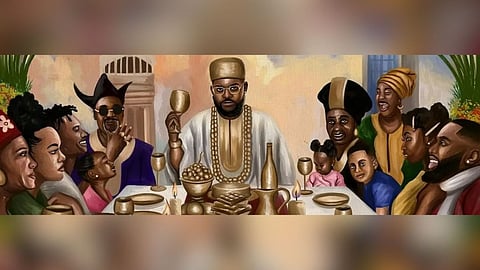
Nigerian rapper, actor, and social media star Falz released his sixth studio album, The Feast, in 2025.
Few Nigerian musicians have shown as much versatility and staying power as the man behind the #ElloBae and #WehDoneSir social media trends. For over a decade, Falz has married musical skills and social activism with digital savvy and comedy.
His rise to global prominence was solidified with his 2018 song This is Nigeria, but it began in 2014 with Marry Me off his debut album Wazup Guy. As a young artist known for video skits, he created an online challenge ahead of releasing Ello Bae (Hello Babe). In it, he tries to romance a woman who values ambition but seeks wealth, a theme that continues to resonate on TikTok. In 2017, he released Wehdone Sir (Well Done, Sir), a witty takedown of fake glamour lifestyles. Both remain popular hashtags, showcasing his ability to merge comedy with social commentary.
Falz became known for his unique blend of hip-hop and Afropop, but what made him stand out was his skill at infusing humour into socially conscious, often revolutionary songs. He is often called a natural heir to Fela Anikulapo-Kuti, the Nigerian music legend and activist who helped create Afrobeat. Like Fela, Falz packs music with playfulness and satire while stirring public consciousness, calling for action against oppressive political structures. In 2020, both Fela and Falz were part of the musical repertoire of #EndSARS protest songs.
Born Folarin Falana in 1990 in Mushin, Lagos, Falz is the son of prominent human rights lawyers Femi and Funmi Falana. His father was Fela’s lawyer. Falz also trained as a lawyer but chose music and acting, channels through which he expresses his activism. His comedy skills, showcased in Ello Bae and in TV series Jenifa’s Diary, became hallmarks of his public persona. In 2016, he won Best New International Act at the BET Awards, and his albums and film roles have earned him both commercial and critical acclaim.
Falz’s activism is inseparable from his music. He participated in the #EndSARS protests and soon after released Moral Instruction. Tracks like Johnny depict everyday Nigerian struggles, while This is Nigeria mirrors Childish Gambino’s This is America, highlighting corruption, lawlessness, and social inequities. His platform allows him to merge celebrity influence with calls for social change, urging young Nigerians to engage actively with societal issues.
Falz’s music echoes Fela not only in satire but in substance. Songs like Talk parallel Fela’s No Agreement, both addressing social inequality and systemic failures. Tracks such as Amen (2019) critique religious leaders complicit in political and economic failures, while Follow Follow (2019) challenges blind conformity, integrating Fela’s Zombie and Follow Follow. His call-and-response style, along with faux Yoruba accents, connects him to ordinary people, reinforcing his critique of postcolonial Nigerian governance while grounding his work in indigenous performance traditions.
While Fela was anticolonial, Falz is hybridised, blending talents and perspectives into a pan-African consciousness attuned to contemporary global realities. His lyrics and videos target young people, motivating them to take charge of their futures. In this way, Falz represents the generational conscience of Nigeria, using art to inspire social engagement and transformative action.
The Conversation
