
- Chennai
- Tamil Nadu
- India
- World
- EntertainmentEntertainment
- Business
- Sports
- Lifestyle
- Technology
- Videos
- Explainers
- Editor's Picks
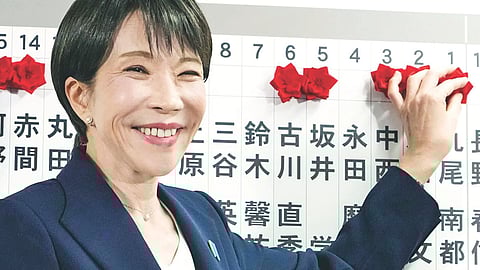
Japanese Prime Minister Sanae Takaichi has delivered her Liberal Democratic Party (LDP) a landslide victory in the parliamentary elections she called soon after taking office. With her power consolidated in Japan’s legislature, the Diet, attention now shifts to how she plans to use that mandate.
Since ascending to the prime ministership in a parliamentary vote in October, the ultra-conservative leader has shaken up Japan’s usually predictable political landscape. Takaichi has connected with younger voters in ways few recent Japanese leaders have managed. Her strong social media presence, distinctive fashion choices and diplomatic confidence have helped craft a modern political persona. In one widely shared moment, she even displayed her drumming skills during a jam session with South Korea’s leader.
Takaichi also moved swiftly to capitalise on her early popularity. By calling a snap election, she sought to secure legislative strength before the inevitable cooling of political momentum. That strategy has paid off handsomely. But voters who handed her that victory will now expect results, especially as Japan confronts economic and demographic pressures that go far beyond electoral politics.
The LDP has dominated Japanese politics for most of the post-war era, but its recent record has been shaky. In 2024, corruption scandals contribute to the party losing its lower house majority alongside its coalition partner, Komeito. The following year, the coalition also lost control of the upper house, leaving the government politically fragile.
The party’s fortunes began to reverse after Prime Minister Shigeru Ishiba resigned in September following those electoral setbacks. Takaichi emerged as the new leader at a time when the party needed both renewal and stability.
Pre-election polls predicted a strong performance by the LDP and its new coalition partner, Nippon Ishin (Japan Innovation Party). Takaichi also received a symbolic boost from US President Donald Trump. While Trump remains unpopular among many Japanese voters, the US is still viewed as Japan’s primary security ally and a crucial export market. There were doubts, however, about whether Takaichi’s personal popularity, particularly among younger voters, would translate into votes. Those doubts proved misplaced. Despite freezing weather and record snowfall in several regions, the LDP returned to office with a significantly expanded majority in the lower house.
Since taking office, Takaichi has adopted a more assertive foreign policy posture, particularly towards China. In November, she provoked strong criticism from Beijing by suggesting Japan could intervene militarily to help defend Taiwan in the event of a Chinese invasion. Chinese authorities responded with sustained public attacks that continued into the new year.
Japanese public opinion remains divided over direct military involvement in a Taiwan conflict. However, there is growing domestic support for Takaichi’s pledge to increase defence spending to 2% of GDP by March, two years ahead of the earlier schedule.
In December, the Cabinet approved a 9.4% rise in defence expenditure to achieve this target. The increase focuses on strengthening domestic defence production and enhancing capabilities in cyber warfare, space security and long-range strike systems. The government is also preparing to revise Japan’s core security and defence strategies in response to perceived threats from China, North Korea and Russia.
Despite the prominence of defence and foreign policy, Takaichi’s long-term political success is likely to depend on her handling of economic challenges. Rising living costs and stagnant wages are becoming major public concerns. Public anger over rising rice costs contributed to the resignation of Japan’s farm minister last year.
Inflation has remained above the Bank of Japan’s 2% target for 45 consecutive months. Although nominal wages have shown some increase, real incomes have declined for four straight years, eroding household purchasing power. Takaichi has made cost-of-living relief a central policy priority. She has pledged to suspend Japan’s 8% food tax for two years. Her government also announced a US$135 billion stimulus package that includes subsidies for electricity and gas bills. However, these measures carry fiscal risks.
It remains uncertain whether her government has workable solutions to these demographic and economic pressures. What is clear is that Takaichi now possesses the political authority and legislative freedom to pursue her policy agenda decisively. Whether she can translate that mandate into lasting economic and strategic gains will determine the durability of her leadership.
The Conversation
